Tarama VillageGenji Kurima
Doctor of Agriculture / Special Advisor to the Tarama Village
The Feng Shui Village Passing the baton of its wisdom.
“Tarama Island has no mountains or rivers, shallow topsoil, and the uplifted limestone beneath it holds no water. Even so, people have lived and farmed on the island for a long time, and it boasts the largest production of Kokuto (dark brown sugar from Okinawa) in Japan. Do you know why? ”
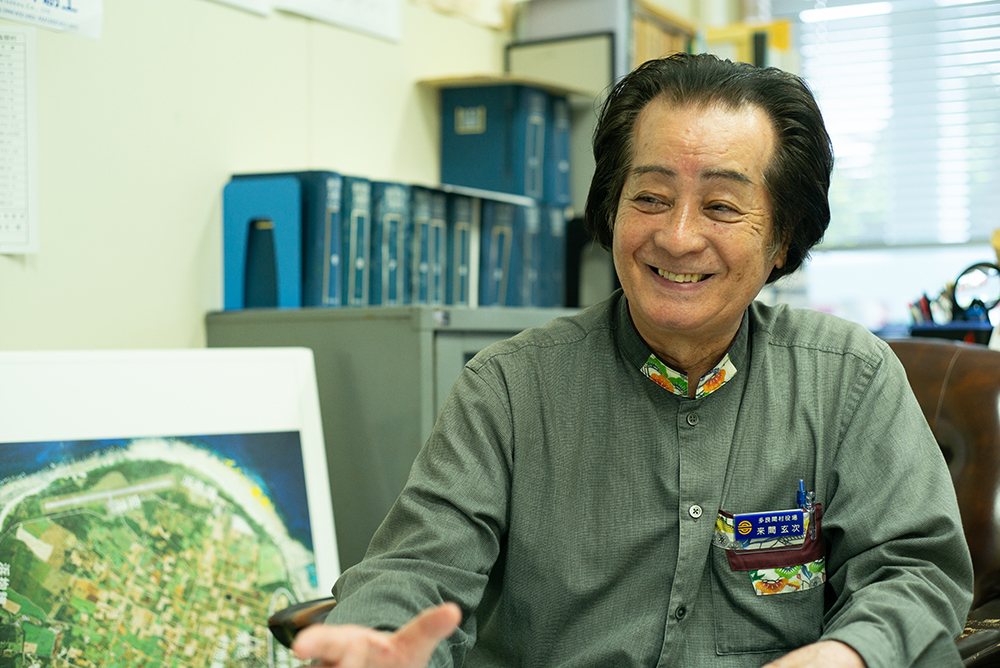
Kurima asked with a smile as he unfolded a map of Tarama Island. Then he told us why, pointing to a feature that was clearly visible on the map.
“You can see trees surrounding the island and settlements. These rows consist mostly of fukugi trees, which are called “Pogu groves” in the local language. (Pogu is a disaster prevention concept and skill that makes use of forests and terrain). Thanks to the development of the Pogu groves and the Kusatimui forest created in the northern part of the island, the living and livelihood of the local people have been protected.”
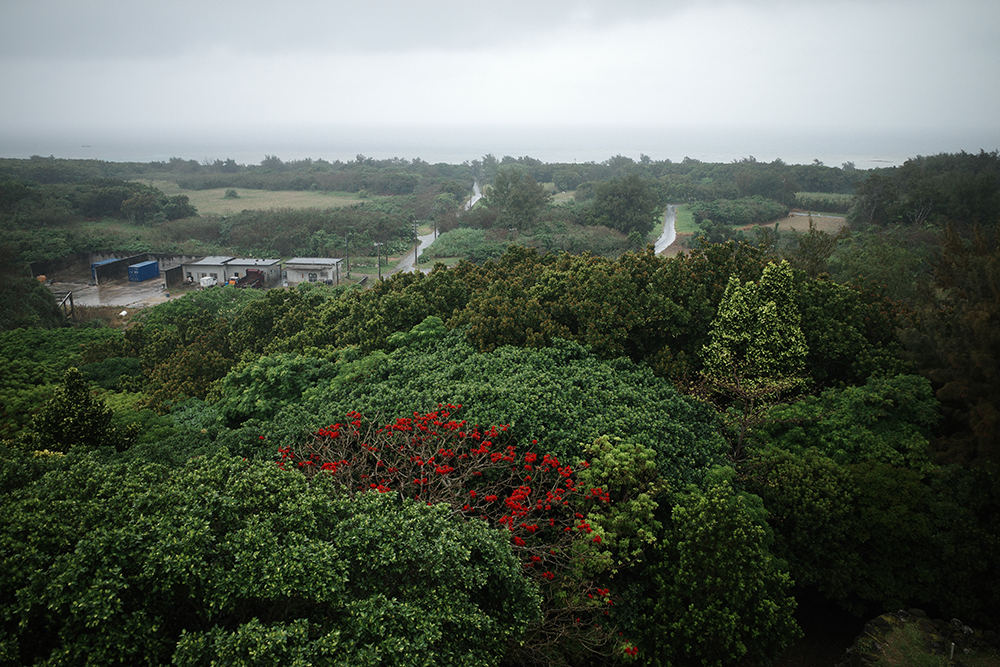
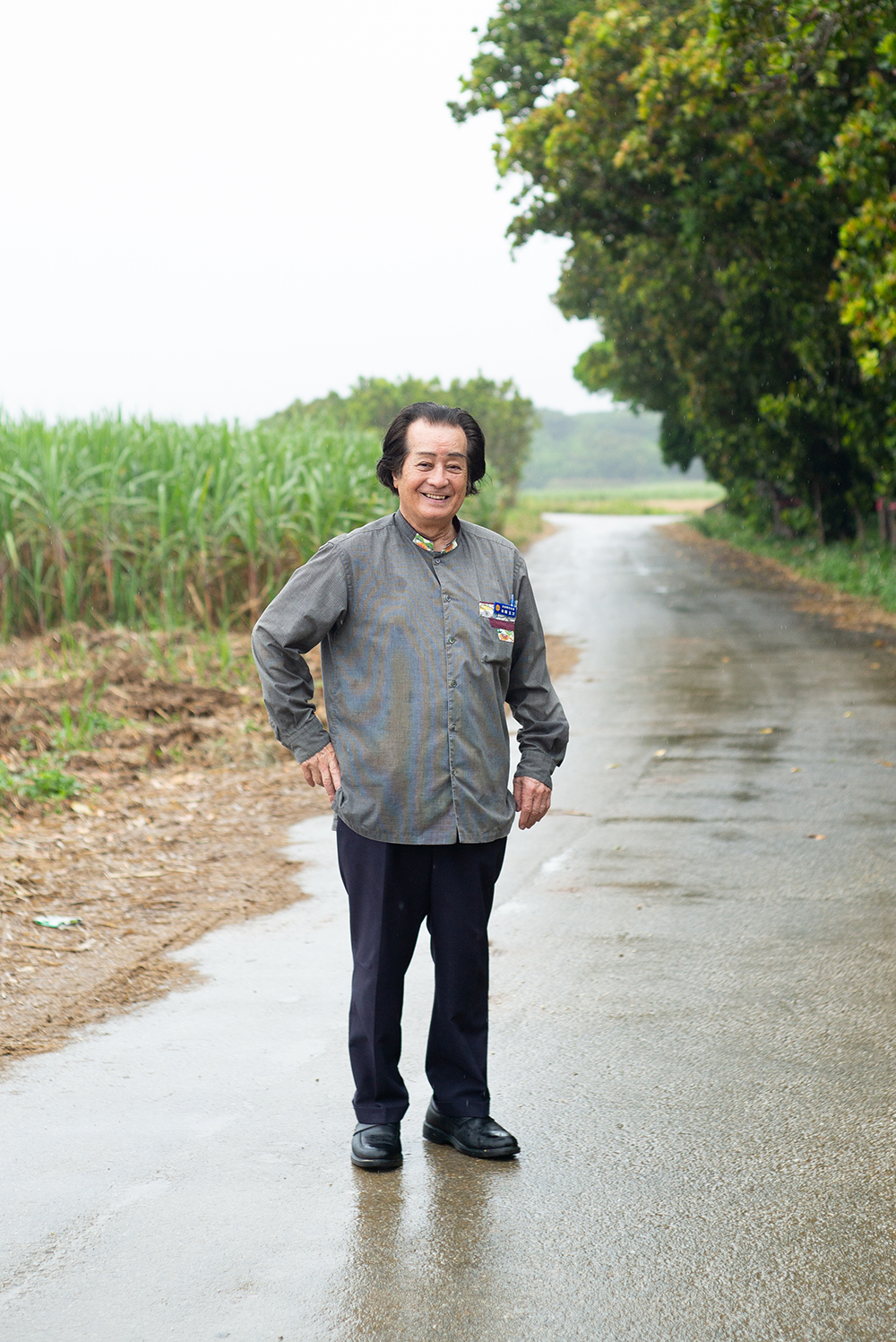
The rows of large Fukugi trees with their lush foliage providing pleasant shade to the settlements and beaches of Tarama, have indeed been visible here and there since I arrived on the island. These trees, however, are not native to the island, but were strategically planted a long time ago.
The planting design where and how the trees were to be planted was based on Ryukyu Feng Shui, established by Sai On, the greatest Feng Shui master and politician in the Ryukyu Kingdom. In 1742, Sai On ordered Shirakawa-uji Keitsu, then head of Miyako Island, to “plant Village Pogu on Tarama Island,” as the surviving document records.
“Feng Shui is not just a good luck charm," Kurima
continues.
“The Beach Pogu planted along the seashore and the Village Pogu surrounding the settlements protect the farmland and people from strong north winds and typhoons, as well as prevent the topsoil from being washed away. The Kusatimui are impenetrable areas created by grouping cemeteries together to mitigate the strong seasonal winds in winter that blow into the village. In other words, the Feng Shui Village is a very logical planned settlement for sustaining life on a small island floating on a big ocean.”
Village designs utilizing Ryukyu Feng Shui were once seen throughout Okinawa. The origin and the pinnacle of this system is none other than Shurijo Castle, the royal castle of the Ryukyu Kingdom. If you open up the map, you will see that Utaki, a place of prayer, and Utaki groves are located to the east, west, and south of Shurijo Castle, while the south side of the castle is open and overlooks the Kerama Islands. However, even though it was the center of the dynasty, it is difficult to clearly see the remnants of when Sai On wielded power in Okinawa which has now become increasingly urbanized. Similarly, most of the areas in the prefecture have lost their former appearance due to development and other factors.
Even in the present time, the replanting and maintaining of the trees in Tarama continues to protect and pass on the benefits of the Feng Shui village to the future. In order to further increase the effectiveness of the Beach Pogu, windbreaks have been planted between farmlands at 200-meter intervals to protect agricultural products from the wind. The islanders have also firmly kept their promise to never build houses outside of their existing settlements. While conducting research on giant Fukugi trees in the Miyako Islands, Kurima has realized once again the value and rarity of the system that has been passed down from generation to generation in his hometown.
There is another valuable heritage lying beneath the island that has protected people's lives as well. It is a freshwater area called Freshwater Lens, which floats between the sea water and the island. Despite the fact that Tarama is a flat island with no mountains or rivers, and that its soil does not allow construction of an underground dam to store the groundwater like in Miyako Island, there has been enough freshwater in Tarama's underground caves to sustain human life since long ago. The source of the freshwater, which is now pumped up from underground, is the lenticular layer of fresh water above the sea.
“The more I look into it, the more I realize how the island's environment has been kept in perfect balance,” says Kurima.
The strange sense of nostalgia one feels when walking through the village is something that the islanders have fervently protected for hundreds of years. Tarama island has been nurturing life. Local people respect its history, protect its environment, and pass the baton of this beautiful village where life continues to thrive.
Interviewed in April, 2025
Writer : Mikiko Tamaki / Photographer : Hiroyuki Tamura