Nagiso TownKazuo Ogura
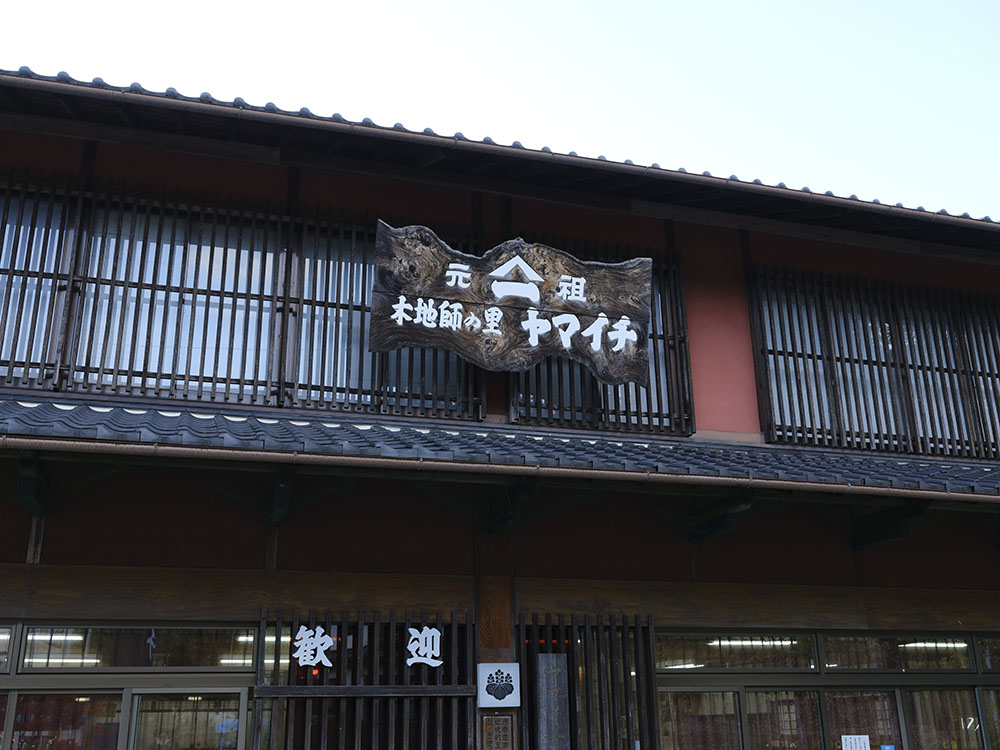
Yamaichi Ogura Rokuro Kogeisyo
The wooden products made by wood lathe show beautiful patterns of wood grains like ocean wave pulling together. In Urushibata district of Nagisomachi, there is a row of woodwork studios/shops displaying unique products made by craftsmen from selecting woods to the finishing touch. Yamaichi Ogura Rokuro Kogeijo (lit; wood lathe craft studio) is one of them. It inherits the traditional technique of Kijishi (woodturner craftsman) who once wandered from mountains to mountains in search of good quality trees.
Living with timeless art of woodturning technique.
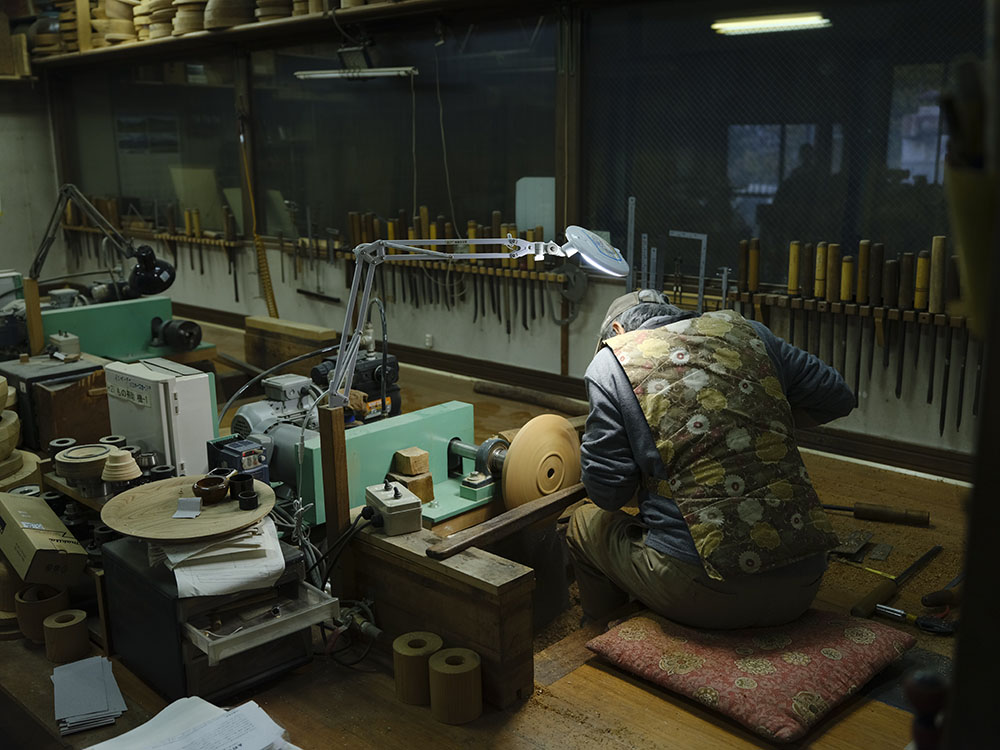
I hear the sound of motor in a quiet studio on its day off. A craftsman is exclucively demonstrating for me his technique using a wood lathe sitting in his seat just like he had been for decades. What he is turning is a trunk of several decades year-old cherry tree from Nagisomachi. When he touches it with a special long-handled plane, a piece of wood is cut out like wave patten spreads rapidly to make a beautiful flower vessel.
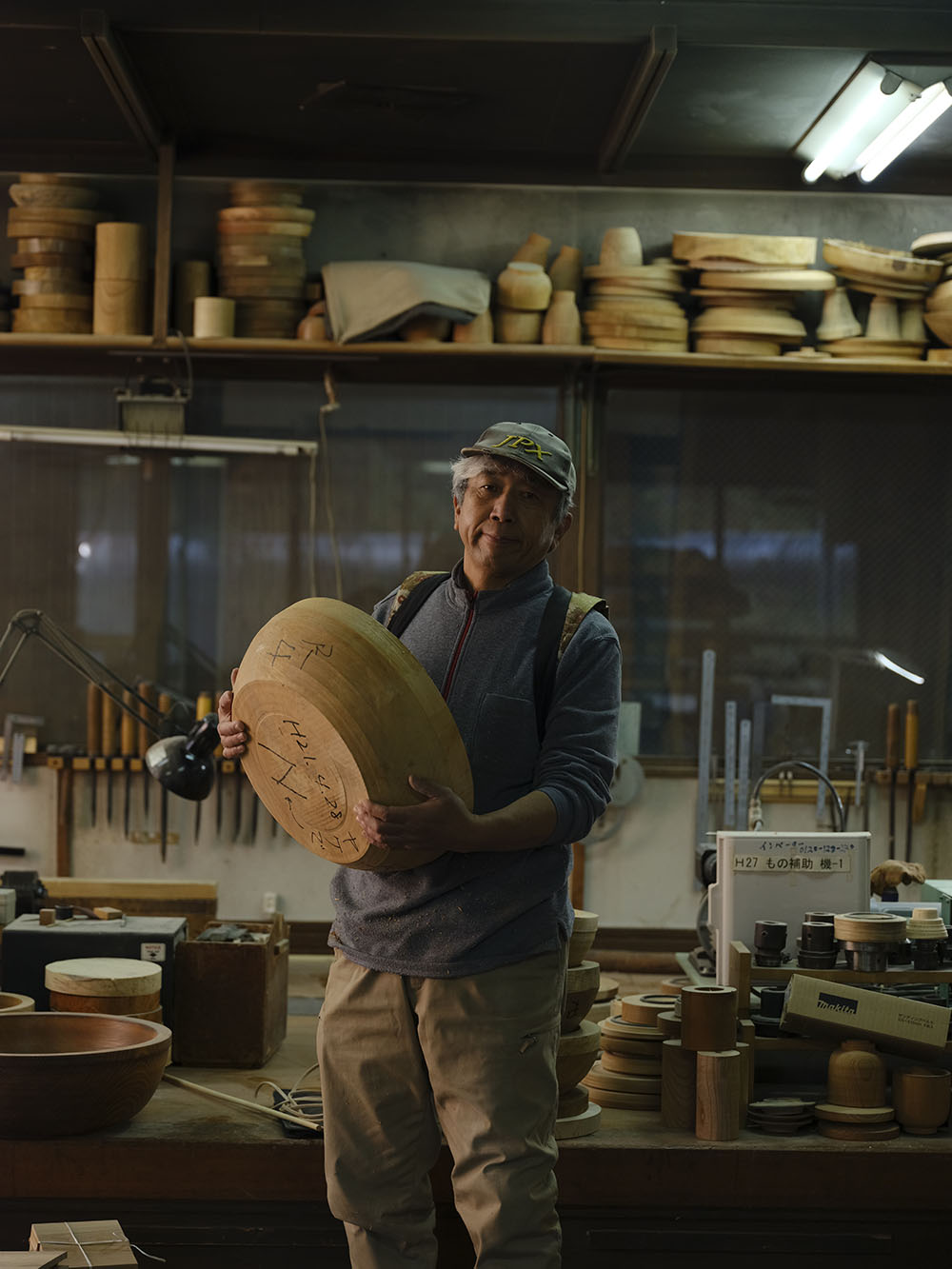
The name of the craftsman is Kazuo Ogura. He wears neko, a type of winter vests originates in Kiso region. He inherited the shop from his father, Kazuichi, in around 1970 and protecting the ancient old technique since then.
If there are any sorts of preconceptions for craftsman, say, they seem fastidious or difficult to approach, those do not apply to Kazuo. He offered me a cup of coffee, frankly asking “how did the photographs turn out?” and was kind enough to go through the history of Kijishi for me.
“Kijishi roughly means craftsman who make wooden bowls or trays with a wood lathe. The origin of the tradition goes back 1150 years or more. Before electrically powered wood lathe was invented, it was operated manually with ropes to process wood. The manual lathe was called Tebiki wood lathe (lit; hand-ground). The person who invented it is said to be Prince Koretaka. He was the first child of the 55th Emperor Montoku who sent a secluded life in Omi province (current Shiga prefecture). Two attendants of the prince, Sanehide Ogura and Korenaka Okura, inherited the technique of grinding wood with wood lathe and their clans were certified as Kijishi who are permitted to create wooden products by cutting out good quality trees. There are few records and many mysteries but apparently my ancestors were the ones who wandered from mountains to mountains carrying the certificates with them.”
The Oguras and Okuras went all over Japan and settled in different places with time. Still Nagisomachi is the only place where so many kijishi families live to form a village called the Village of Kijishi. Even after those kijishis stopped drifting and started settling in different places, they survived as craftsmen with pride of being descendants of Prince Koretaka’s attendances.
The common method of processing woods with a wood lathe is called Tateki, cutting the wood in round slices. The main method Kijishis in Nagisomachi works with is called Yokoki, which uses a plate of sawn trunk. Those plates are sturdy and show beautiful patterns of wood grains but the method requires high-level technique of handling the piece and adjusting the pressure according to the direction of the growth ring as the piece rotates. Other than such technique, woodturner craftsman is expected to have an eye to select good trees, as well as the technique to smith the plane to be accepted as a professional.
Kazuo has devoted his time to improve his technique with his fellow craftsmen. “There were about 100 contemporaries including the ones who moved in from outside. I’d look at what others works and think ‘oh, he can do this already?’ I would be mortified and that was why I could keep making efforts. We’d gather and talk about developing new products and sell them in the cities, too. Yeah, we did many things together.”
Forty years plus have passed in a twinkle. There is little in the district to remind of its past prosperity now. However, Kazuo feels there are more people who are hungry for “wood” for the past several years. “Until a few decades ago, people would choose wooden products that were polished and lacquered. But these days, they seem to prefer plain wood with which you can feel the wooden touch. Because the quality of coating materials has improved so much, we can make products with plain wood surface but waterproof at the same time. You can use it for oily food or even stew. I feel so happy when customers come back saying “the one we bought made us want to buy more” because wooden products are lighter than earthenware and easy to handle.”
Interviewed in October, 2020
Writer : Mikiko Tamaki / Photographer : Kenta Sasaki