MazeSatomi Yamamoto
Representative of Sanmaze Kobo
“Sanmaze Kobo” is a farmers' market which is popular for traditional foods, handmade seasonings, and freshly-baked bread. The “Goheimochi making experience” by the shop staff is popular. Not only, rice but also barley miso and perilla sauce are handmade only from Maze. Since the service started in 2018, many travelers gather around the irori fireplace.
What I convey is our usual taste and usual life.
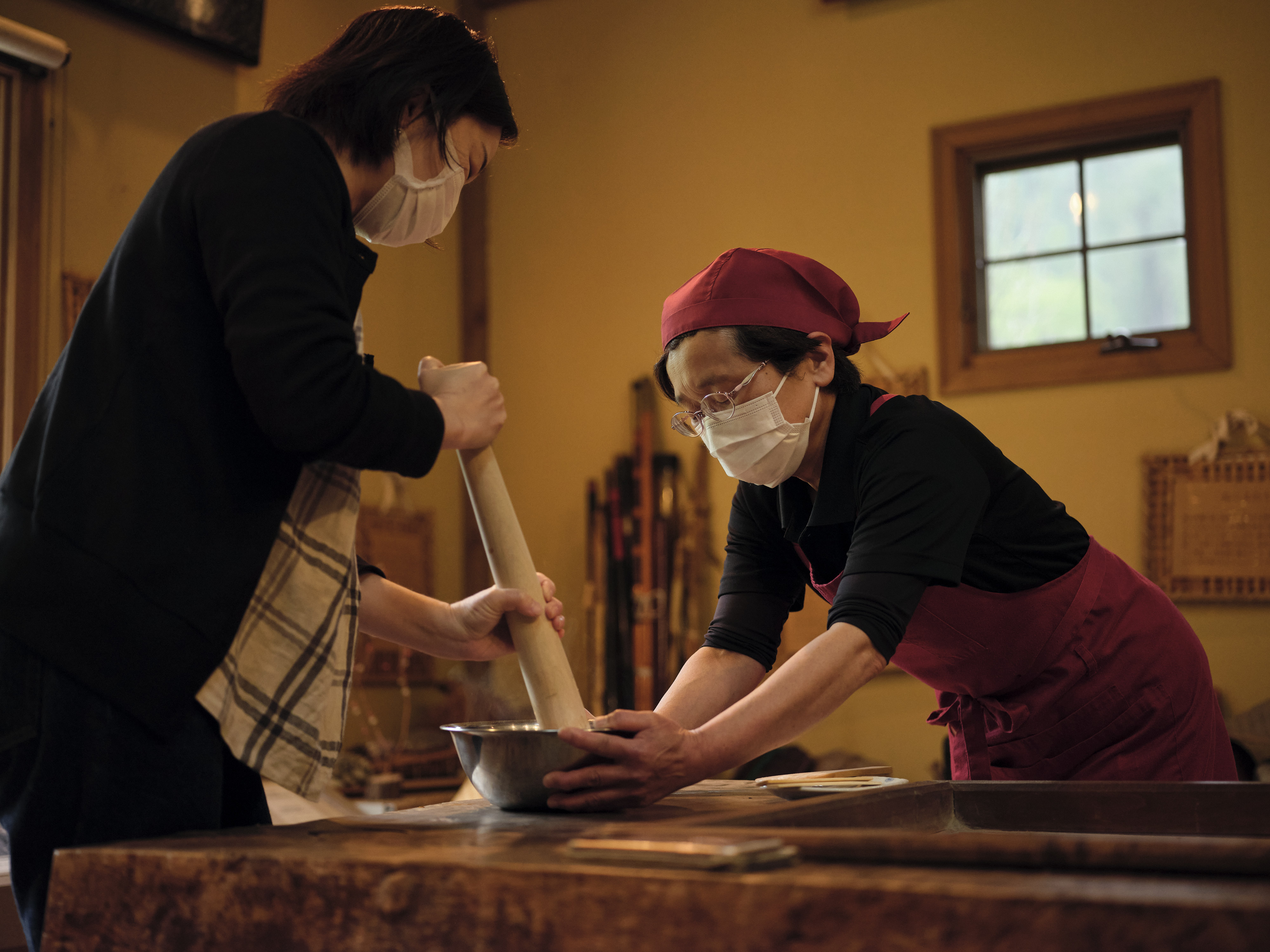
“Now, please crush polished rice here first. Some people think Goheimochi is made with sticky rice, but it is made with plain rice.”
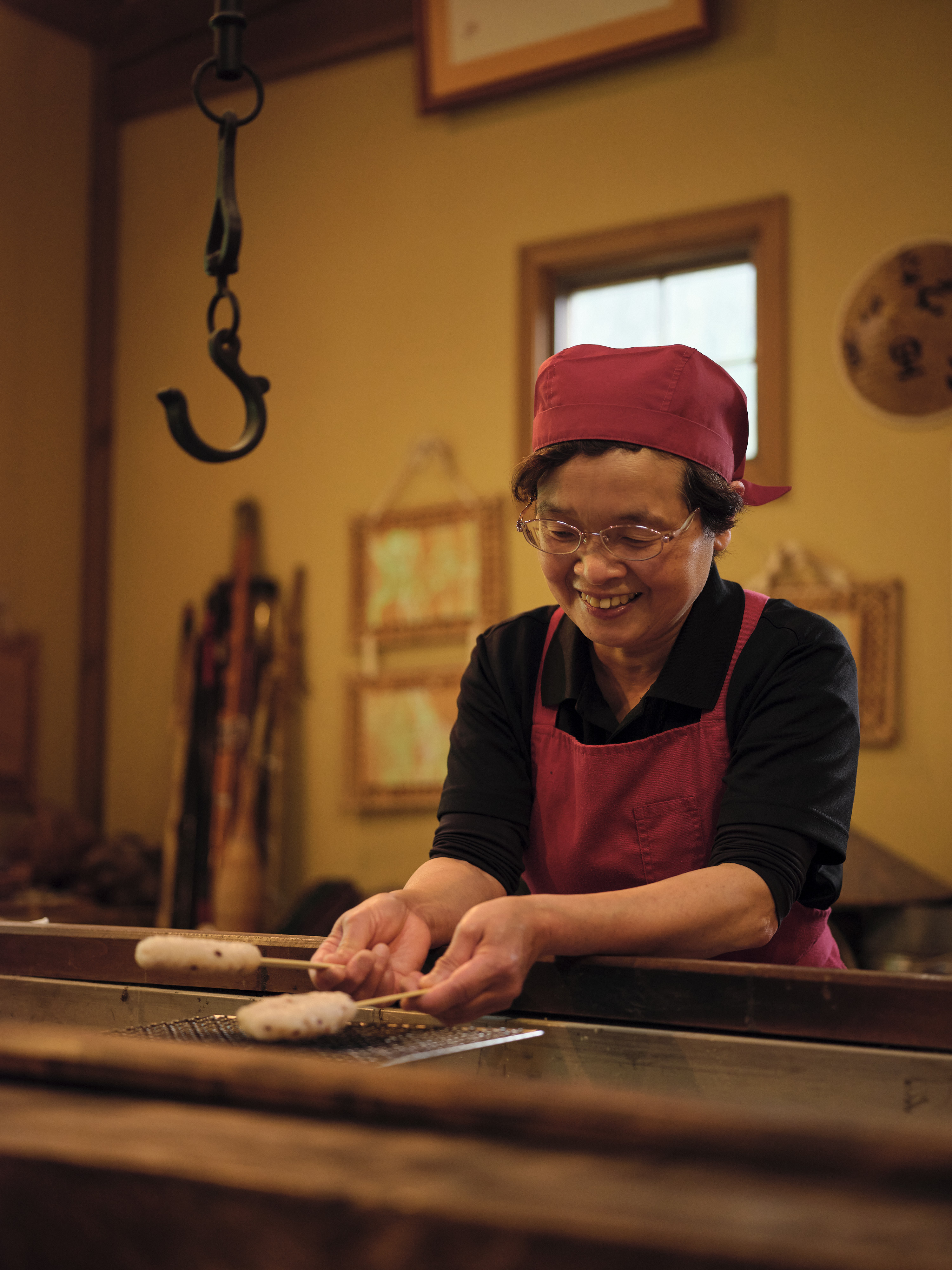
A pestle, and polished rice mixed with a faint pink is prepared next to the irori fireplace where the charcoal is burned. There are also skewers and two types of sauce. When we visited the “Fishing Center Mizube-no-Yakata (Waterfront Museum)”, the venue for the Goheimochi making experience, Satomi Yamamoto, the representative, was completely prepared and greeted us with a toothy smile.
“In the past, I think many people bought a lot of souvenirs as proof of their visiting when they go to travel, but nowadays, I feel more and more people want to actually experience and make something. Times have changed.”
Of course, for Satomi, Goheimochi is one of the tastes with memories from her childhood.
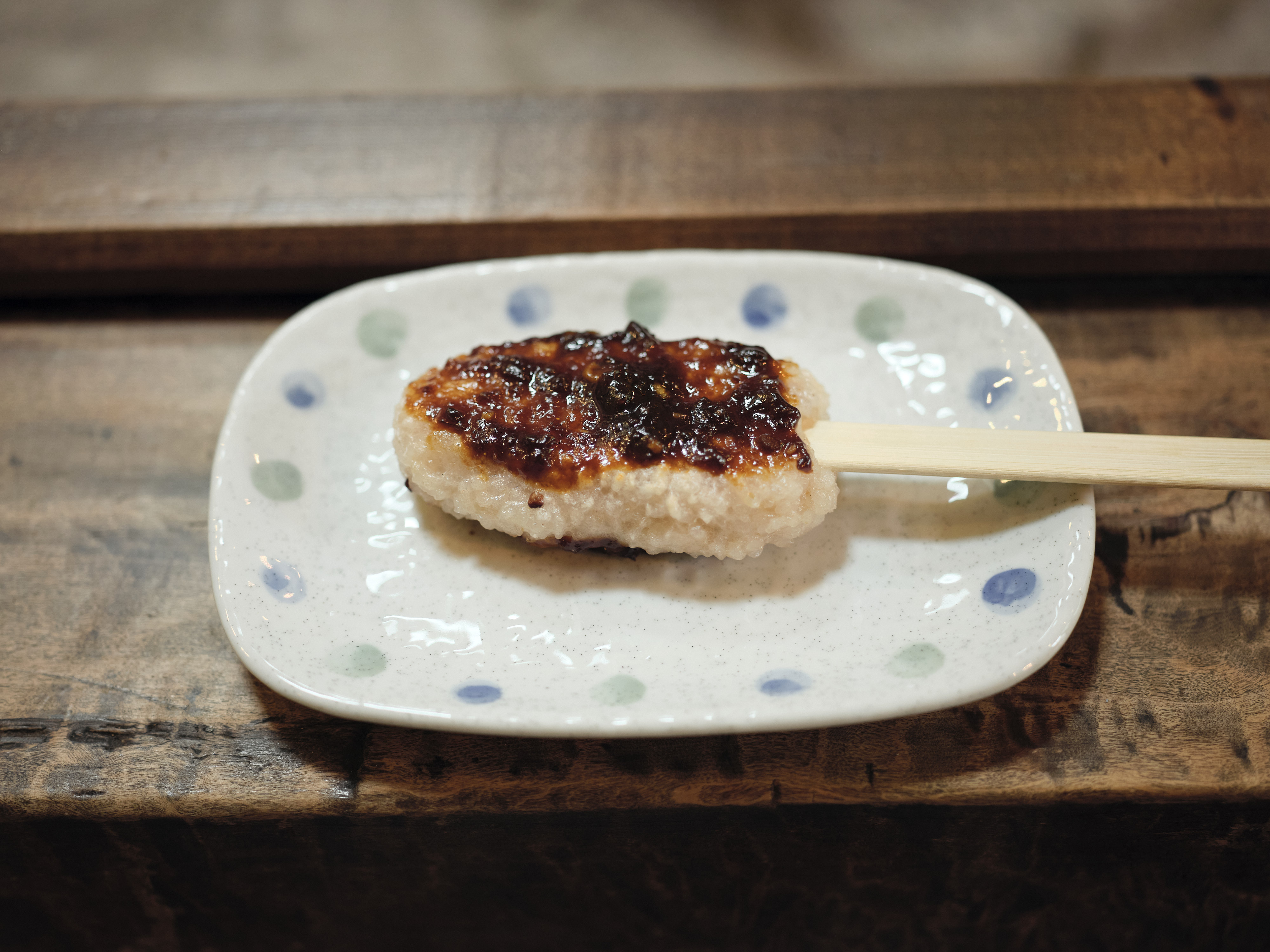
“In the old days, we took off the frame from horigotatsu (sunken foot warmer) and baked it in the brazier inside. In the Goheimochi making experience, walnuts sauce with barley miso is also prepared, but perilla sauce with a sweet supper is the standard in Maze. We used to eat it during the break time between lunch and dinner called “kobiri (a small lunch)” that is dialect in Maze.”
While Goheimochi is baked, they enjoy chatting with visitors around the irori fireplace.
“It is same as making Goheimochi. The subject is not difficult thing. We just tell them about the days we have spent. Even so, if they are pleased, we will be motivated.”
And from a few years ago, Sanmaze Kobo started manufacturing and selling “Nezushi”, a traditional fermented food in winter, and “Hobazushi”, a taste of early summer, as processed agricultural products.
“Now, not only travelers but also locals order for it feeling nostalgic.”
Certainly, the efforts of Sanmaze Kobo, which should have been “the commercialization of daily life in the region,” may be gradually expanding its role to “inheriting the vanishing local culture.”
Interviewed in April, 2021
Writer : Mikiko Tamaki / Photographer : Kenta Sasaki