Kikai Town
Saori Kawabata
Island Singer
Warmth and Brightness in Kikai Island’s Songs of Everyday Life
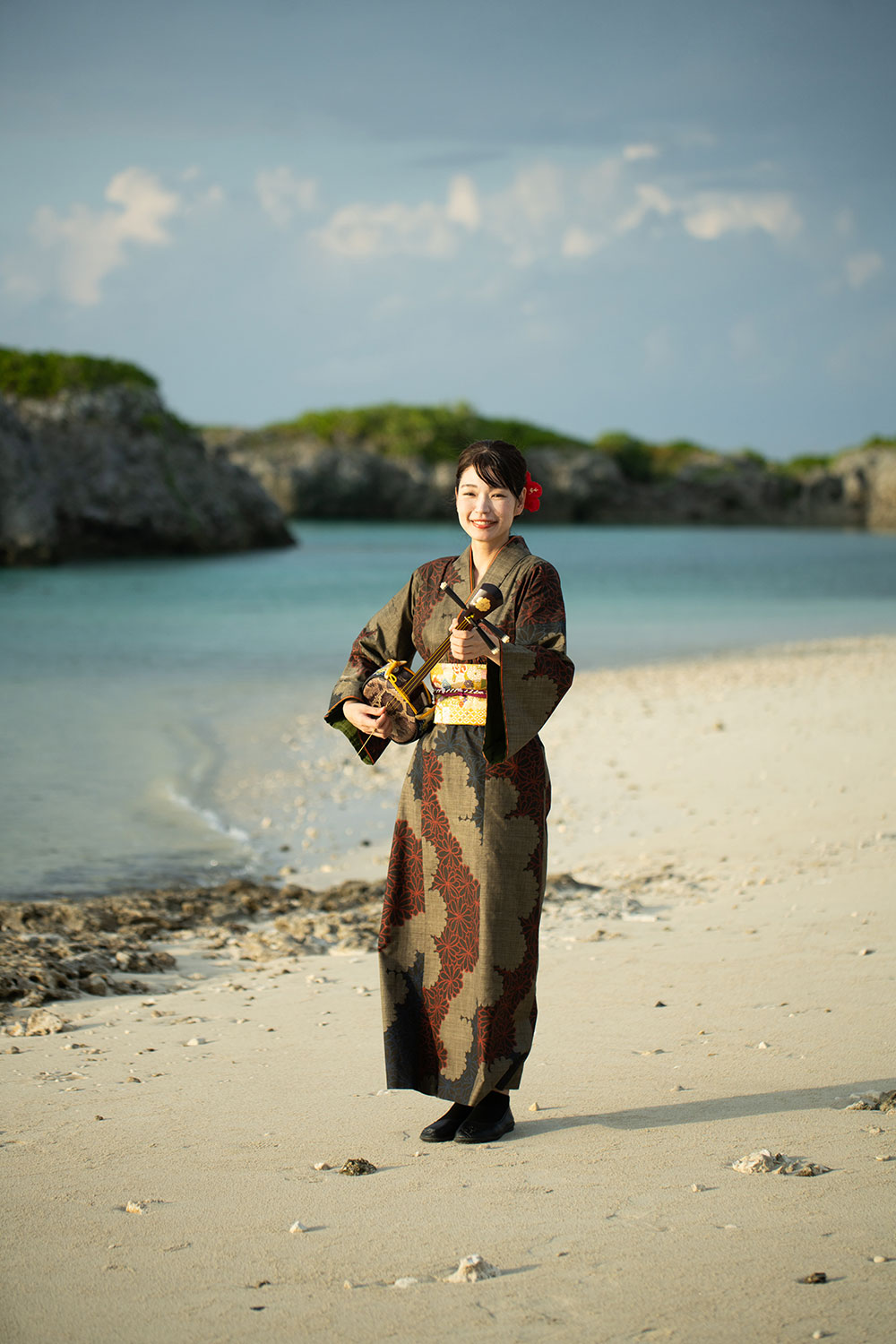
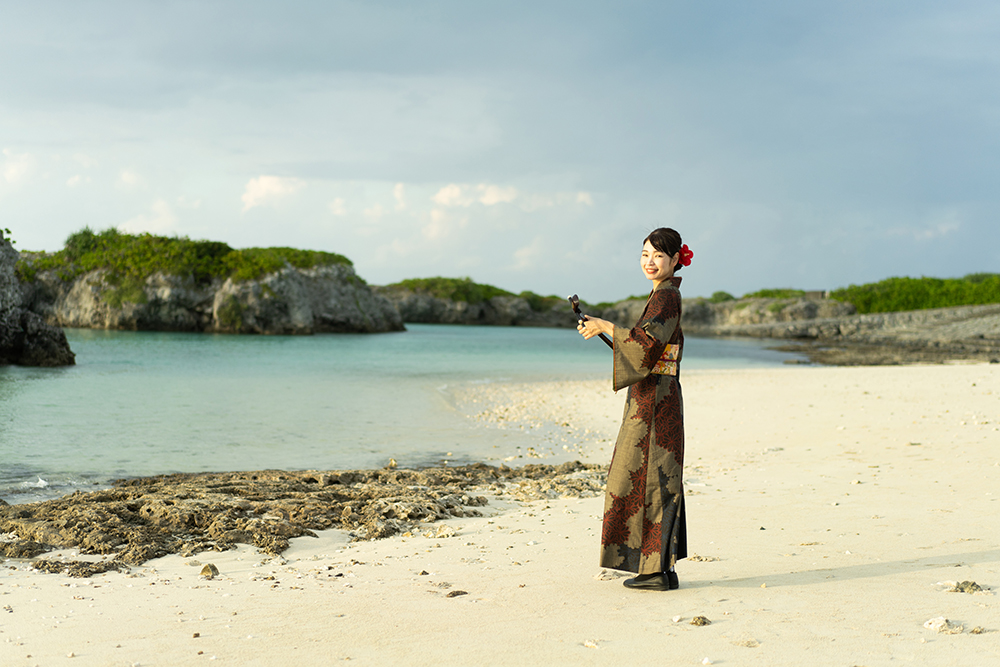
Saori Kawabata is one of the “utasha”, singers who carry on Kikai Island’s traditional songs. Hoping to photograph her in a setting that reflects the character of the island, we arranged to meet at Sugira Beach shortly before five in the evening. The weather had been unsettled, and heavy rain had fallen until only ten minutes earlier. Yet the moment Kawabata arrived with her sanshin, the clouds began to drift away, and, as you can see, the last light of the sun turned the sea a vivid blue. As the quiet sound of the waves blended with the tones of her sanshin and her singing voice, the scene before us seemed to take on an even deeper beauty.
Kawabata appeared in this newspaper a decade ago. “Looking back, I feel that many of the things I talked about then have gradually taken shape and become something I can now share with others,” she told us with a bright smile. For example, at the time, she explained that she had begun working on a project that had just been selected as one of the Agency for Cultural Affairs’ grant-supported initiatives for the preservation and transmission of Amami island songs. Later, in 2020, her work in the library of a local elementary school led her to teach island songs to students. Drawing on the songs she had collected from communities across the island, she found herself not only preserving them but also passing them on to children. In fact, just the day before our visit, the third graders she teaches had performed an island song at their school presentation.
Kawabata’s work of collecting island songs has also taken a step beyond preservation. She now reflects not only on the songs themselves but also on the cultural background and the ways of life in which they were created. She continues to visit all 37 settlements on the island, listening to elders share songs that are remembered by fewer people with each passing year. She also writes a serialized column for the town newsletter titled “Visiting the Settlements Through Island Songs and Words,” in which she introduces not only the songs but also the memories and stories that come with them.
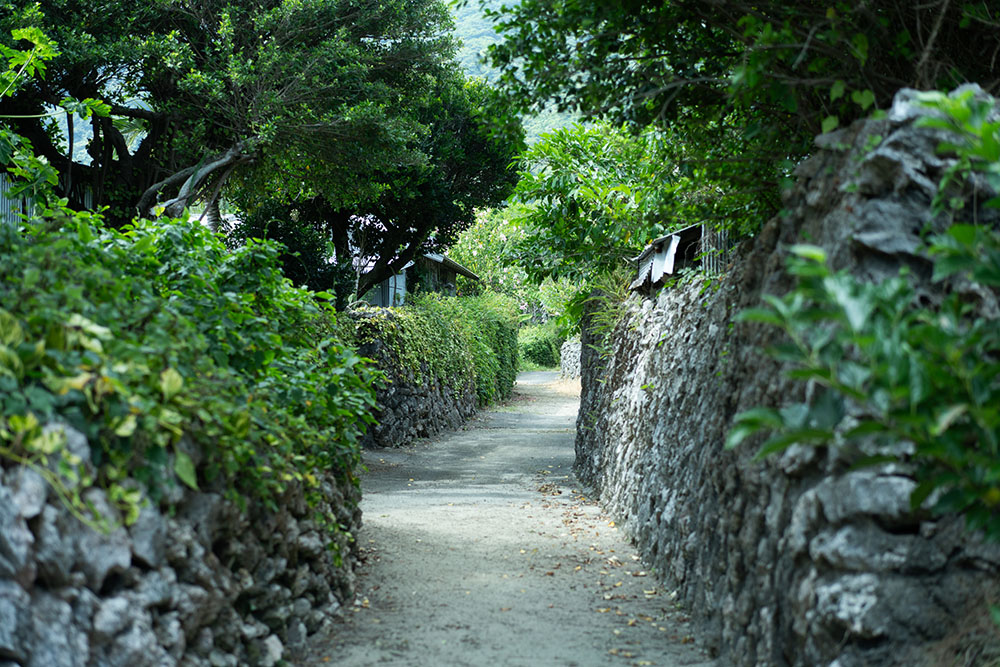
Among the songs she has learned through this work, one she continues to perform from time to time is Aden Takazaka-bushi. The song was quietly passed down in the Aden district, a community known for its rows of coral-stone walls.
“As people climbed what was considered the steepest slope on the island, they would say to each other, ‘Your legs must be tired—please ride the horse,’ and ‘No, you should ride instead.’ That exchange became the basis for Aden Takazaka-bushi. It’s a song shaped by everyday wisdom—something to help keep one’s breathing steady and maintain rhythm while walking uphill. At the same time, it reflects the kindness of islanders, who think of one another even in difficult places. Visiting the slope myself helped me understand the feeling of the song in a much deeper, almost physical way.”
Songs from the Amami Islands are often described as having melodies and lyrics that carry a sense of shadow, shaped in part by the hardships of life under strict rule in the past. Kawabata, however, feels that Kikai Island has many songs that hold a different tone—songs that reflect warm relationships and bright scenes from everyday life. Although she trained mainly in the repertoire of Amami Oshima, she now hopes to keep drawing attention to the everyday songs that are distinctive to Kikai Island.
“Of course, Kikai Island has also faced many difficult periods in its history. But the Kikai I know is a place filled with sunlight and rich natural surroundings, where people are genuinely kind. The more I learn how clearly that spirit appears in the old songs, the more grateful I feel. Whether on stage or when working with children on the island, I want to share through song that Kikai is a place where both the land and its people have such warmth and strength.”
Interviewed in October, 2025
Writer : Mikiko Tamaki / Photographer : Eri Tokura