Hayakawa TownShirakaba-kai
Narada village/Hayakawa-cho
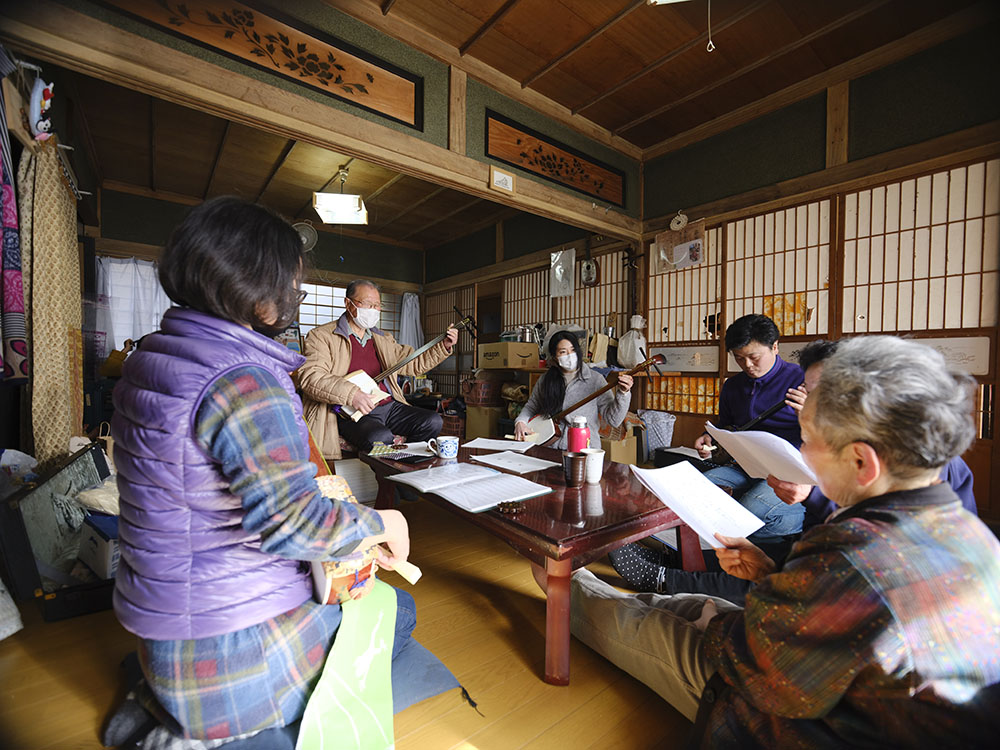
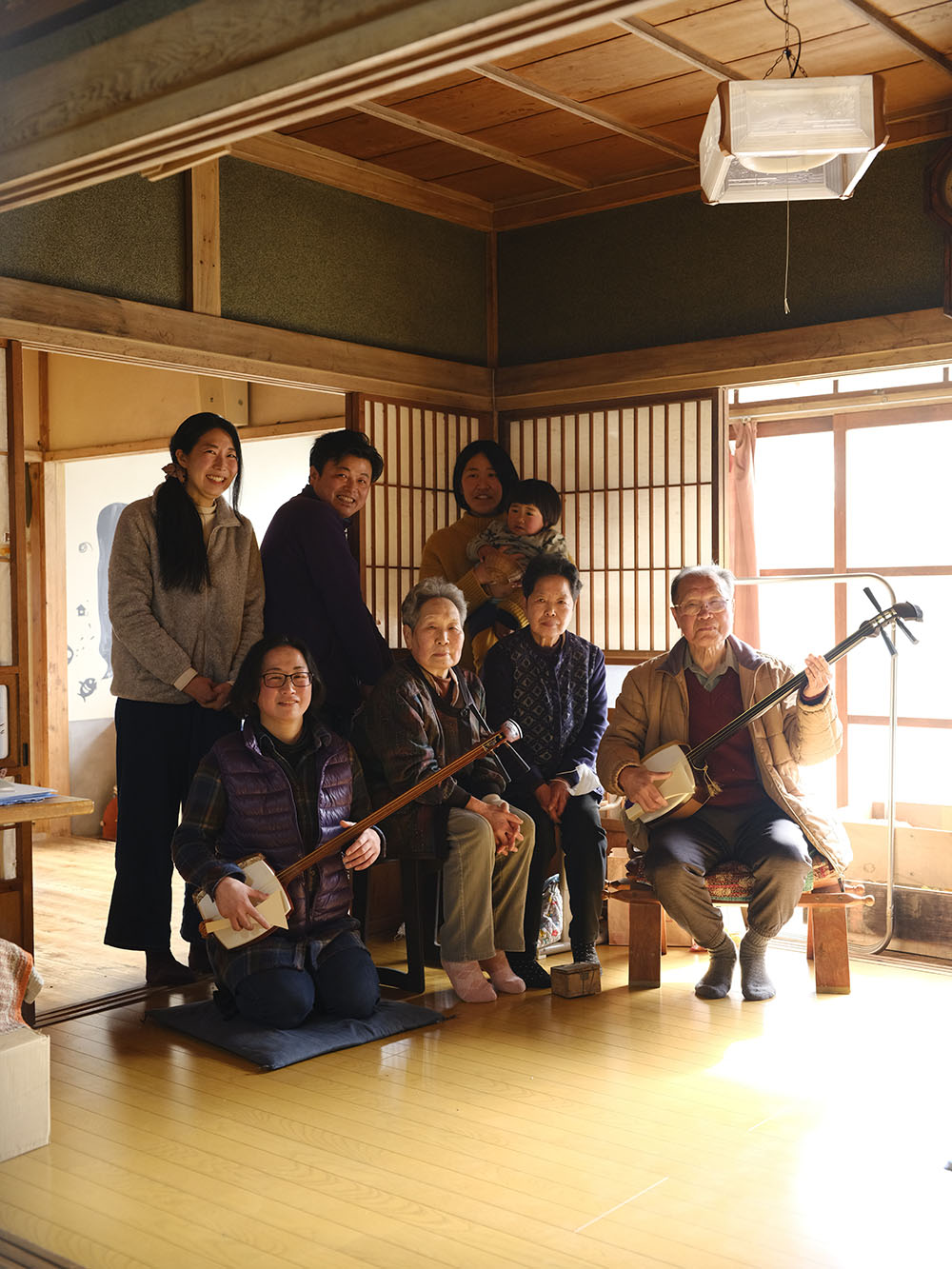
Narada, known as an unexplored village, is located in the northmost of Hayakawa-cho. I visited the practice room of Shirakaba-kai, a group formed by the locals to hand over the folk songs to next generation. They told me that they were excited about the new wind blowing in. Currently there are only ten households in this village as population kept decreasing. Nevertheless, their warm welcoming spirit hands over the hope for the future with beautiful folk songs and bright laughter.
A small village is a large family-handing over our precious days to the future with folk songs.
“Hey, everyone, join and dance.”
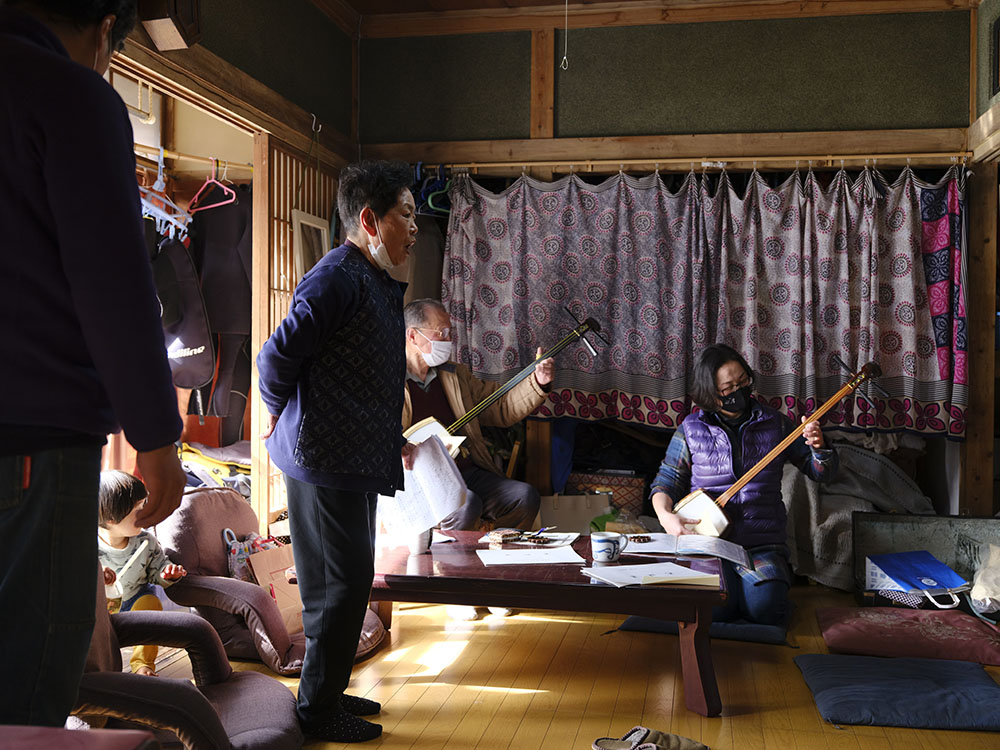
The smile of Tomiko Arai and Isao Fukasawa invite men and women of all age to join the circle. Amateurs, beginners, and children stand up one after another to join effortlessly and dance to the slow Shamisen tune, joyful singing voices and rhythmical shouts. After the practice is over, they enjoy cups of tea together. In a traditional Japanese house lit with morning sunlight, the atmosphere of the company of all generation is so warm and lovely that it even makes me feel envious.
Narada village is known for its unique dialect (Narada-language) and culture within Hayakawa-cho. Shirakaba-kai, a cultural activity group was formed by former members of local Young Men’s Association in 1962. They took care of a wide range of local activities from the preparation of festivals to children’s haircut. The core activity though, was and still is to preserve and hand over their local folk songs to next generation.
“Just like our dialect, we have unique folk songs being handed down from our predecessors.”
The life manager Minoru Fukasawa continued to tell me how the traffic of this area used to be busy, roads spreading towards both sides of the area to Shizuoka and Nagano, even to Niigata prefectures across the pass. They would exchange commodities at the pass with people from neighboring villages. We can get a glimpse of such history from their folk songs.
♪ verse1
Say when you come from Gujo Hachiman
You squeeze your sleeves
Though not raining
You Squeeze your sleeves
Though not raining
♪ verse2
Say the crows in Narada
Always in pairs
They chitter-chatter
Never bitter bicker
They chitter-chatter, never bitter bicker
From “Hachiman”
“As the lyrics tell, the first tune of this song is almost the same as that of Kawasaki, a folk song of Gujo city in Gifu prefecture. However, the following melody and dance are completely different and we start singing about Narada, not Gujo. It is said that this song was orally handed down from people in Gifu over Kitazawa pass which comes from Nagano prefecture.”
Similarly, one of the most famous Narada folk songs Kaga Ondo, casually called Ensa, is considered to be handed over from Kaga region in Ishikawa prefecture. What kind of maps did those people imagine when they traveled across mountains on foot? What kind of lives did they lead? It makes me feel excited to think about the predecessors listening to the lyrics.
There were times when the uniqueness of their songs drew attentions and members of Shirakaba-kai were invited to recite from many regions. However, there are less and less opportunities because of depopulation. They now try hard to preserve the songs at least in their own village.
“Seven years ago, I started to ask people who moved out from the village to Kofu region to join our activity to preserve our songs,” says Fukasawa.
As a result, their activities expanded: regular meetups are held joined by new people who had never had a chance to learn about the folk songs.
Young members of Narada who newly moved in drove this new movement forward. Haruhi Kashima is originally from another village in Hayakawa-cho but moved in when she got married. She visited Fukasawa to learn how to play shamisen at her own wedding five years ago. Saori Shimizu, who was told about Haruhi thought it would be fun to join the lessons. Then in 2017, the then newcomers Yuki Uehara joined with his family members to the group, as well. Those new movement led to the 2018 revival of the Bon Dance festival, a tradition that has ceased forty years ago.
Interviewed in January, 2021
Writer : Mikiko Tamaki / Photographer : Kenta Sasaki