Abu TownAgricultural Producers’ Cooperative Corporation Umoregi no Sato
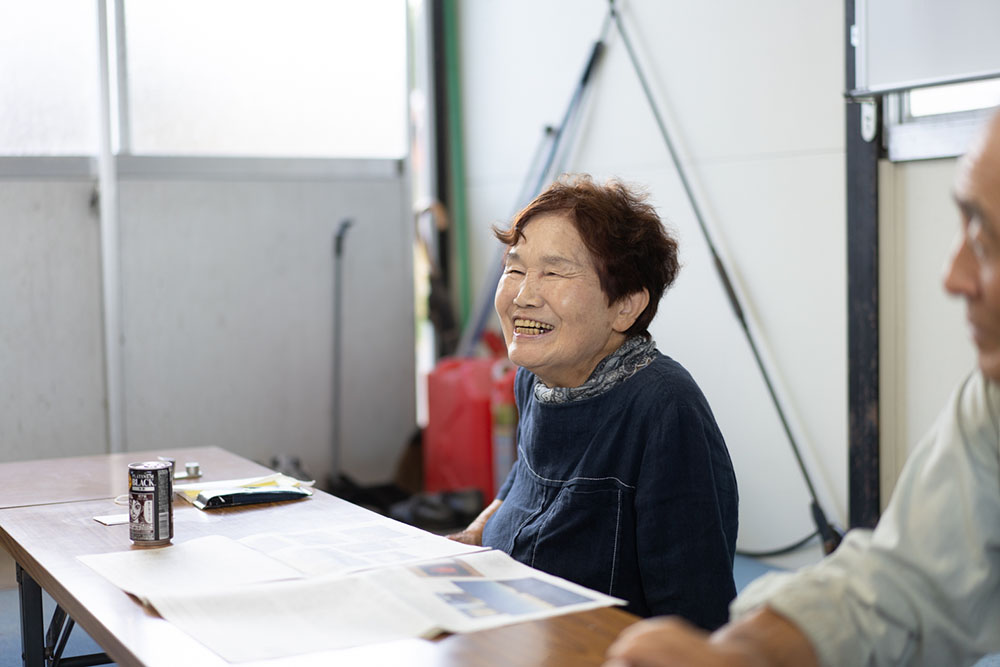
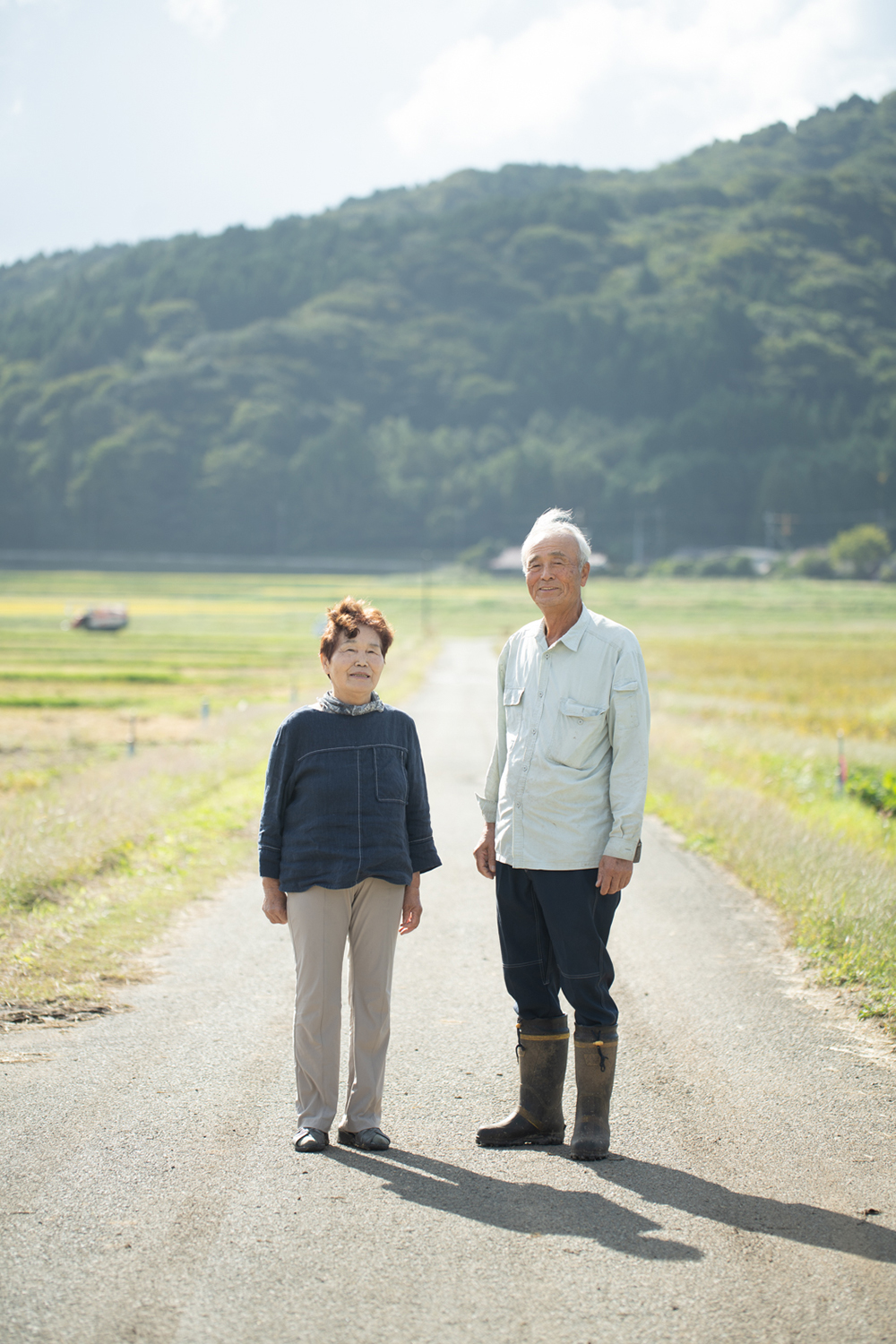
Toshio Tanaka, Sumiko Hara
By working together, we support one another, find purpose in life, and foster a sense of community.
The Ubuka region consists of four villages: Izu, Sanwa, Joman, and Kurogawa. In 1997, these settlements were brought together to establish the agricultural corporation Umoregi no Sato. As a pioneering and model case of community-based farming in Japan, it has attracted nationwide attention. However, Tanaka explains that the foundation of this corporation is deeply rooted in the region’s long and unique history.
“This land was originally a vast lake, formed long ago by volcanic eruptions. Over time, various plants and animals accumulated here, creating extremely fertile soil. Traces suggest that agriculture may have first been practiced in Japan during the Jomon period right in this area. However, the lake had great depth. The land, known as ‘fukada (deep paddies)’, was extremely wet, so our ancestors had a lot of trouble, planting rice while burying themselves up to their waists in mud.”
With a weak foundation extending as deep as 30 meters underground, it is not even possible to enlist the help of horses and cattle. To improve the situation in which farming could only be carried out manually, a land readjustment project was undertaken across the entire Ubuka district in 1915 (Taishō 4) to expand the size of individual rice paddies. At the time, such an initiative was rare in Japan and considered highly progressive.
However, in hindsight, this development may have come a little too early. "No one had anticipated that mechanized farming would become the norm. While the paddies themselves were widened, the pathways between them remained narrow, at just sanshakudo (three shaku, or about 90 cm wide). “For more than 90 years, people had to move between each other's rice fields just to use machinery,” explains Tanaka.
A new farmland development plan for Ubuka emerged once again around the beginning of the Heisei era.
With this project, roads would be widened, soil conditions improved.
It would also improve drainage enhanced and finally realize the long-held goal of creating farmland where rice paddies and fields could exist side by side. Additionally, “the 40 tractors previously used in the community were reduced to just three, eliminating the need for farmers to go to other areas to work to pay off thier debts.” It seemed like the best possible strategy, making full use of the area's natural advantage-what could truly be called “a land where one can see a hundred chōbu at a glance.” However, Tanaka and the other leaders still had lingering concerns.
“What concerned us was the future of our community. Up until then, life had certainly been inconvenient, but it was precisely because of these hardships that people relied on each other, fostering a strong sense of unity within the village. We couldn't shake the feeling that if things became too convenient, the close-knit bonds that had been nurtured over generations might start to break apart.”
In response, “Umoregi no Sato” made a conscious effort to establish activity groups beyond farming at the time of its founding. Women took the lead in these initiatives, forming the “Yotsuba Circle”, where members from the four villages came together across traditional boundaries. The circle was organized into four divisions: “Processing” (for agricultural products), “Production,” “Environment,” and “Exchange.”
These activities not only provided work but also created a sense of purpose in daily life and opportunities for social connection. In doing so, they fostered new community bonds and encouraged greater independence among the women involved.
Through continuous innovation and effort, “Umoregi no Sato” has managed to sustain itself as an agricultural cooperative-a feat often considered difficult-for over 28 years. In recent years, based on the belief that “regular stimulation is essential for everyone’s well-being,” two new sources of inspiration have been introduced to the Ubuka region.
The first is the cultivation of medicinal herbs, which began in 2015. As Japan seeks to reduce its reliance on imported ingredients for traditional Kampo medicine, “Umoregi no Sato” has been experimenting with growing three types of medicinal plants-Senega, Tōki (Angelica acutiloba), and Shakuyaku (Peony)-even though cultivation methods for these plants have yet to be fully established in Japan.
The second major change came in 2024, marking the 28th anniversary of “Umoregi no Sato”. For the first time, the organization hired a full-time young employee from outside the local community.
“Growing medicinal herbs requires an immense amount of effort and time. It’s not something that will turn a quick profit. But the process of tackling difficult challenges brings in fresh perspectives and new energy. I hope that our young employees will eventually come up with ideas that will make this a place they truly want to preserve for the future.” says Tanaka. Hara adds, “Lately, we've been seeing newcomers move here who aren’t from farming backgrounds. What’s even more exciting is that they, in turn, are bringing visitors from outside the region. It makes me so happy, and I really want to support them.”
As they reflect on their hopes for the community and the next generation, their expressions are warm and full of optimism.
*This refers to dividends paid by the cooperative based on the degree of involvement in the project.
Interviewed in January, 2025
Writer : Mikiko Tamaki / Photographer : Eri Tokura