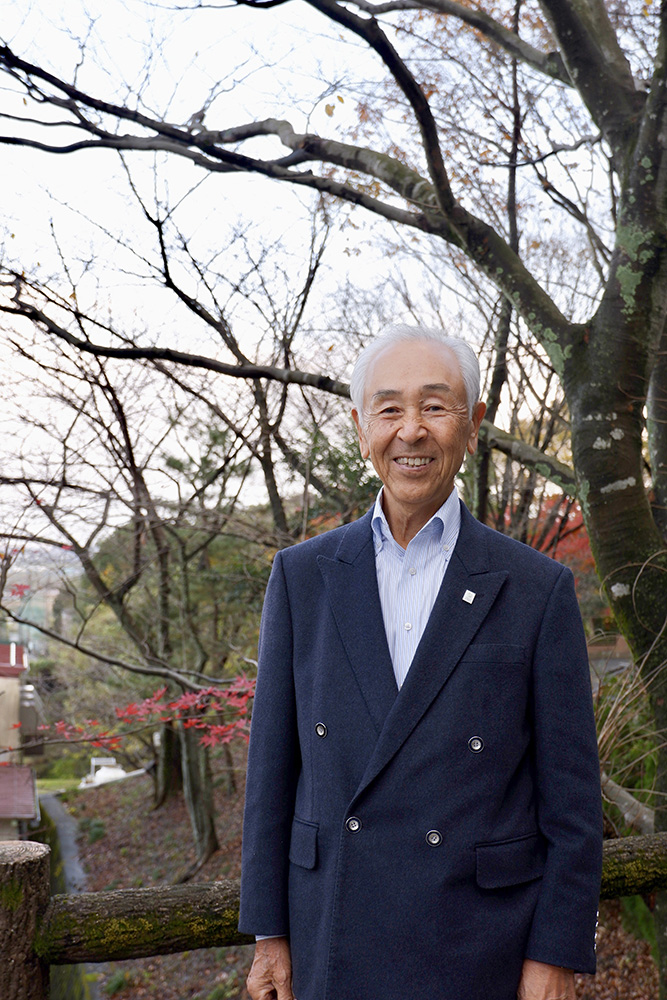
Toshio Fukui
Chairman, Naka Nippon Hyoto Co., Ltd.
Founded in 1895, Nakanihon Hyoto boasts the largest market share in Japan in the production of crystal sugar under the “Umajirushi” brand and has been one of the supporting companies of The Most Beautiful Villages in Japan Association since its early days. While serving for many years as a member of the Association’s Board of Directors, Fukui has made it a lifelong pursuit to visit “beautiful villages” across the country. In Nanno Town, Kaizu City, Gifu Prefecture, where the company’s factory is located, he is also personally involved in the conservation of satoyama landscapes, devoting his own time and effort to environmental stewardship.
Not Fearing Change, Polishing Inner Treasures
Nanno Town, located near Yoro Falls. When we requested an interview with Toshio Fukui, he suggested meeting not at the company’s headquarters in Nagoya, but here, where the crystal sugar factory stands.
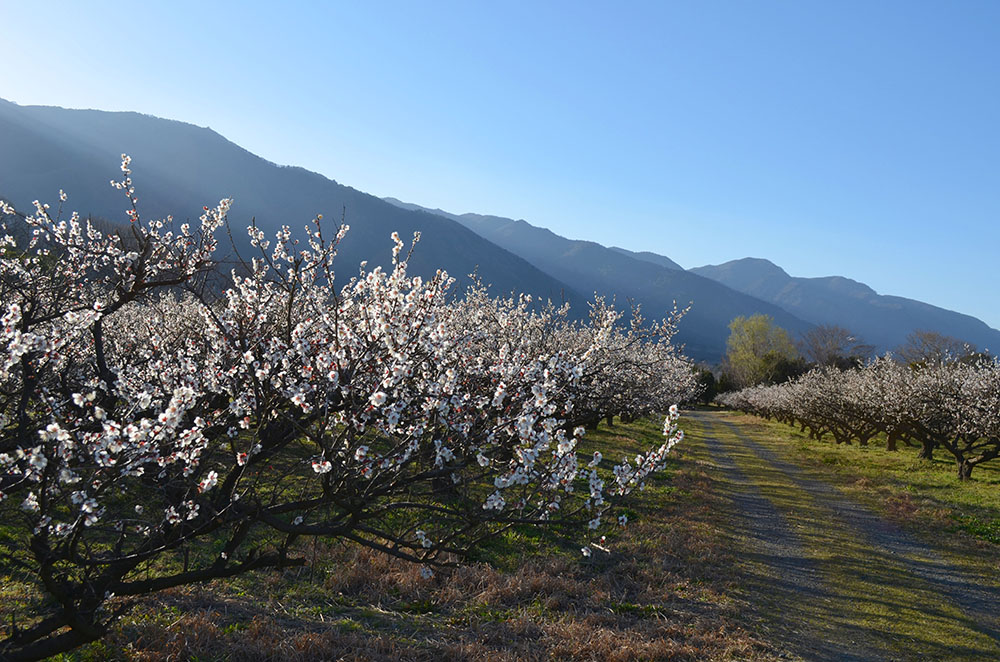
“This was the first place I wanted to show you,” he said, leading us to the Nanno Ume Garden. Once unused land, the site was transformed over the course of ten years into a park through the planting of 500 plum trees by Nakanippon Hyoto. In spring, the blossoms fill the air with a gentle fragrance, and the fruit is harvested through seasonal events that invite visitors to make plum wine and plum syrup using “Umajirushi” crystal sugar.
In autumn, an impressive scene unfolds as clusters of red spider lilies bloom along the banks of the Tsuya River that flows beside the garden. At the northern edge of the site, in the waters nearby, lives hariyo, a rare freshwater fish of the stickleback family. The area has become a rich ecological habitat that frequently attracts researchers and documentary film crews.
This place could well be described as a “small beautiful village,” one that has been shaped largely through Fukui’s own lifelong efforts. Since completing the Nanjo factory in 1977, he had envisioned creating “a beautiful place that exists in harmony with the surrounding natural environment.” In Yoro, where he had been evacuated during the war, Fukui had already begun to nurture ideas and sensibilities that would later connect to the concept of “beautiful villages.”
Several decades later, when the The Most Beautiful Villages in Japan Association was being established, Fukui recalls that he had just returned from a trip to England’s Lake District and the Cotswolds. “I was deeply moved by the towns and villages there, where a sense of unity is maintained in harmony with the surrounding natural environment. I found myself asking whether there were landscape regulations in place, and was told that such measures had already existed for some twenty years. Looking back at Japan, I felt that efforts to preserve beautiful satoyama landscapes and rural settlements were still limited. It was at that moment that I received word of the preparations to establish the The Most Beautiful Villages in Japan Association.”
“Compared with Europe in particular, Japan’s beautiful villages still seem, inevitably, to be weaker in terms of overall coherence,” Fukui observes. “That said, initiatives such as the ‘Beautiful Day’ activities provide a very good opportunity for communities to reexamine themselves. In recent years, the secretariat staff have also been highly active and reliable, which gives me a sense of reassurance—feeling that it is enough for us to remain supporters.”
As he reflects on the current state of the The Most Beautiful Villages in Japan Association, Fukui also expresses his hopes for member communities: that they will not fear change, and that they will polish the treasures within their regions through their own efforts. This outlook closely parallels the history of Nakanippon Hyoto itself. Founded as a crystal sugar manufacturer, the company weathered the turmoil of the wartime and postwar periods by shifting to military production as well as rice milling and bread-making, before later returning its focus to crystal sugar and moving swiftly to automate its production processes.
“I’m not fond of effort, you know,” he adds with a gentle smile, half in jest. Yet behind that expression lies a quiet confidence born of having successfully passed on a century-old enterprise to the next hundred years.
After stepping down from the presidency at the age of 70 in line with his long-held intention, Fukui has spent the intervals between his duties as chairman traveling across the country to visit beautiful villages. “I think I’ve probably visited quite a lot of them, even among the board members,” he says with a smile. Leafing through a carefully organized album, one finds photographs of him standing alongside local leaders from various regions.
“For me, the The Most Beautiful Villages in Japan Association has been something that has broadened my horizons and brought me many meaningful encounters. I intend to continue passing on the baton as a corporate supporter as well.”