Tarama
Tarama Village, Miyako District, Okinawa Prefecture
A small propeller plane roars off from Miyako Airport to Tarama. The flight duration is only 20 minutes but I do not want to miss the scenery change so I sit by the window and leaned my forehead against the slightly clouded acrylic window to watch it.
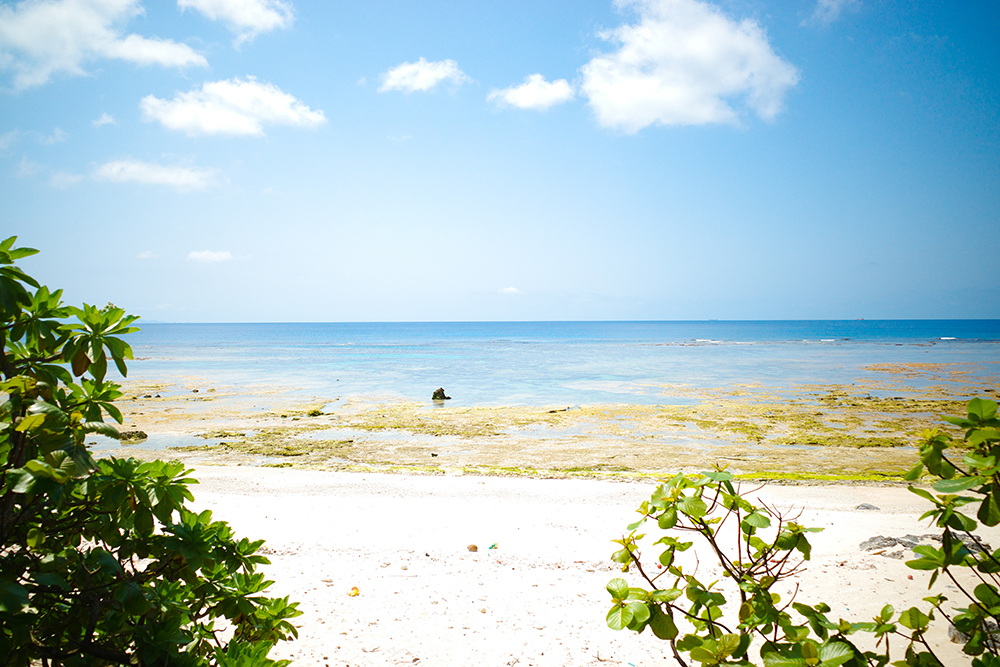
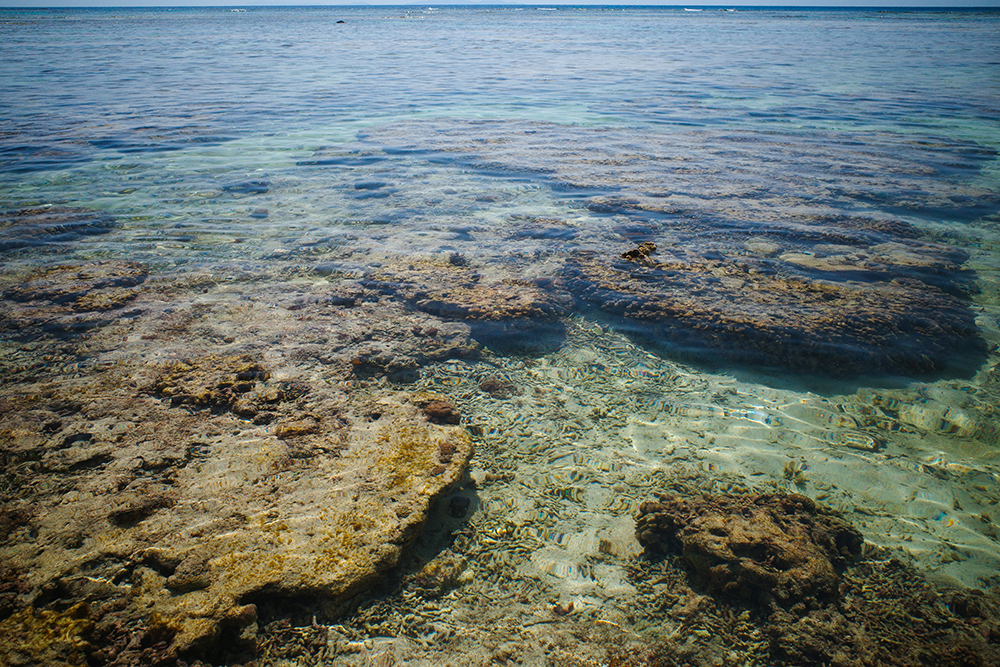
As the plane goes up and continues westward, I can see even from the sky that the ocean is becoming clearer and clearer. A mixture of deep green and blue, the surface of the water shimmers as it moves, as though it is a fluid body with a thick texture like heated glass, or even like the back of a creature with a mind of its own. The “beauty” of the water is overwhelming, far beyond expectations, and there is no doubt that this is an ocean that attracts divers' admiration.
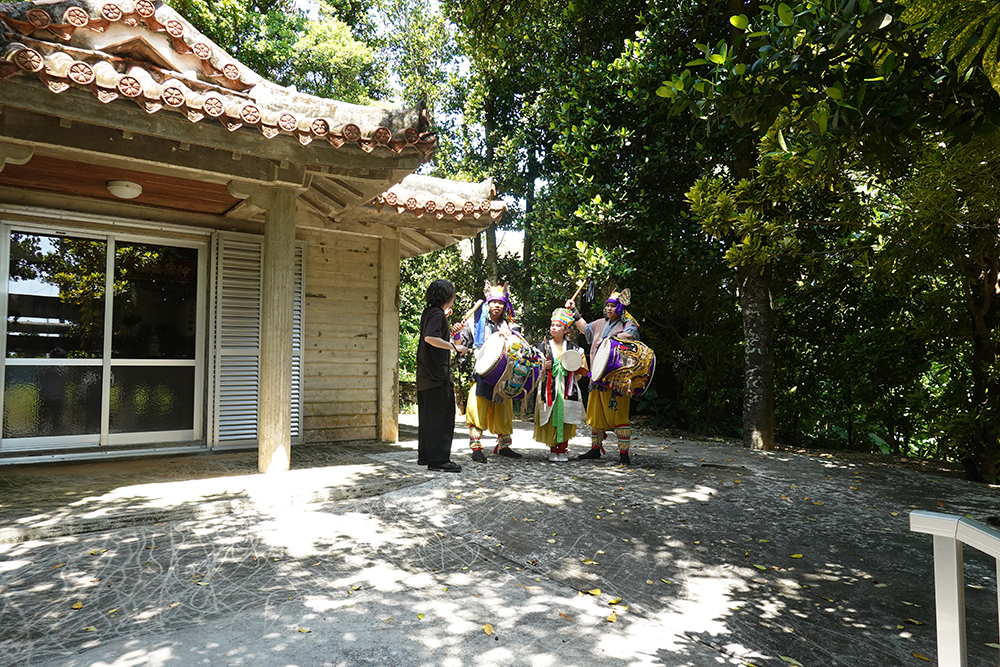
In 2010 Tarama became the first village in Okinawa Prefecture to join the Association of the Most Beautiful Villages in Japan. The local resource, the features of Tarama Village they want to preserve for the future registered, however, was not this ocean but the traditional Tarama harvest festival “August Dance” and the “Feng Shui Village” that makes use of nature and is rooted in daily life. This fact reflects the philosophy of the people who worked hard for the registration: that “more important than the visible beauty of nature and landscape is the beauty of the soul of the Tarama people who preserve and pass it on.”
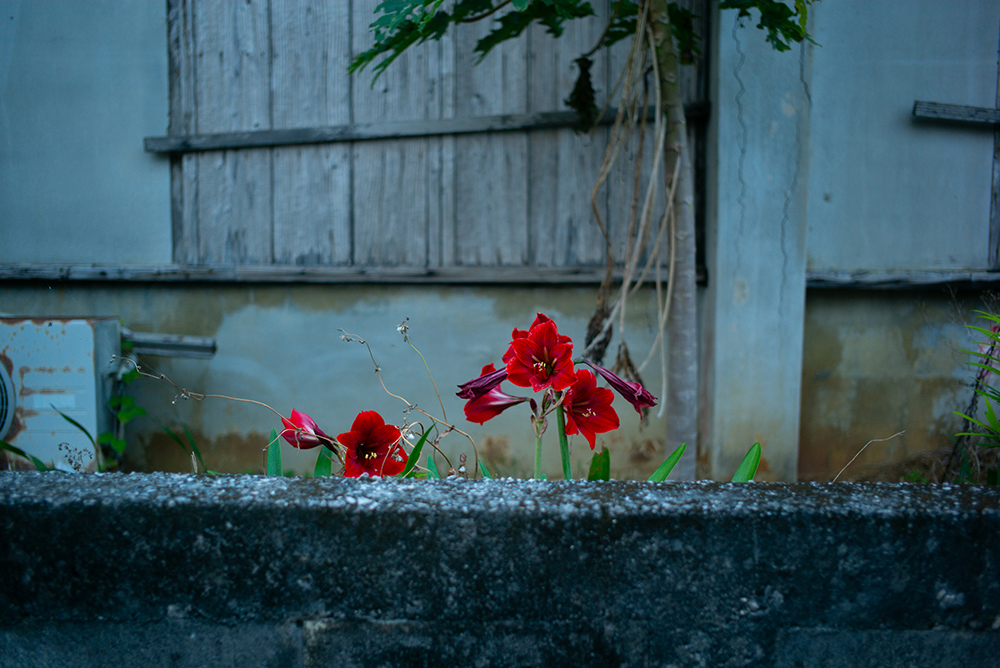
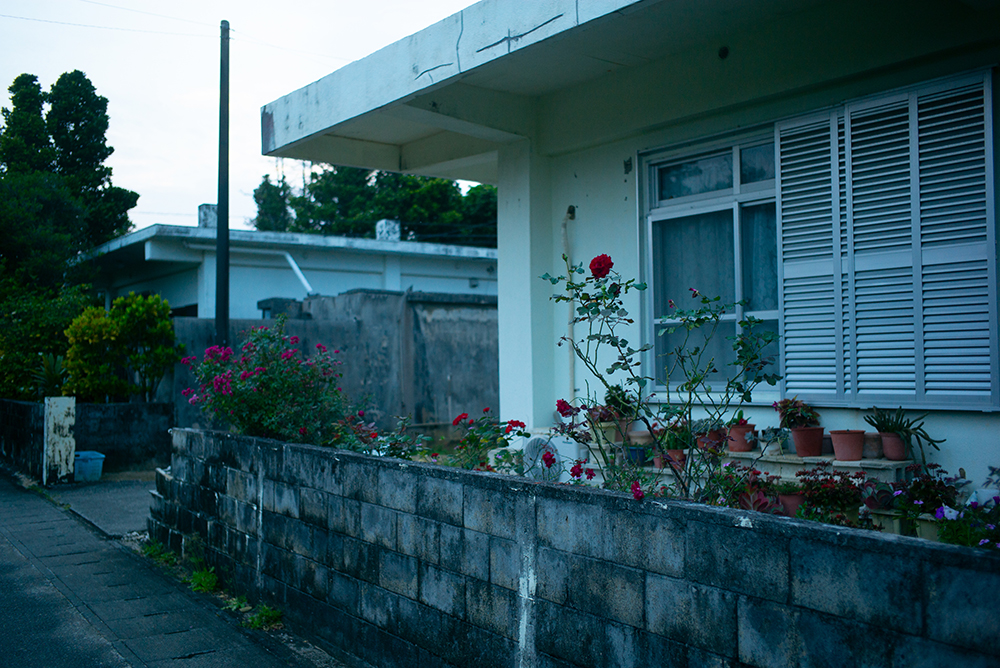
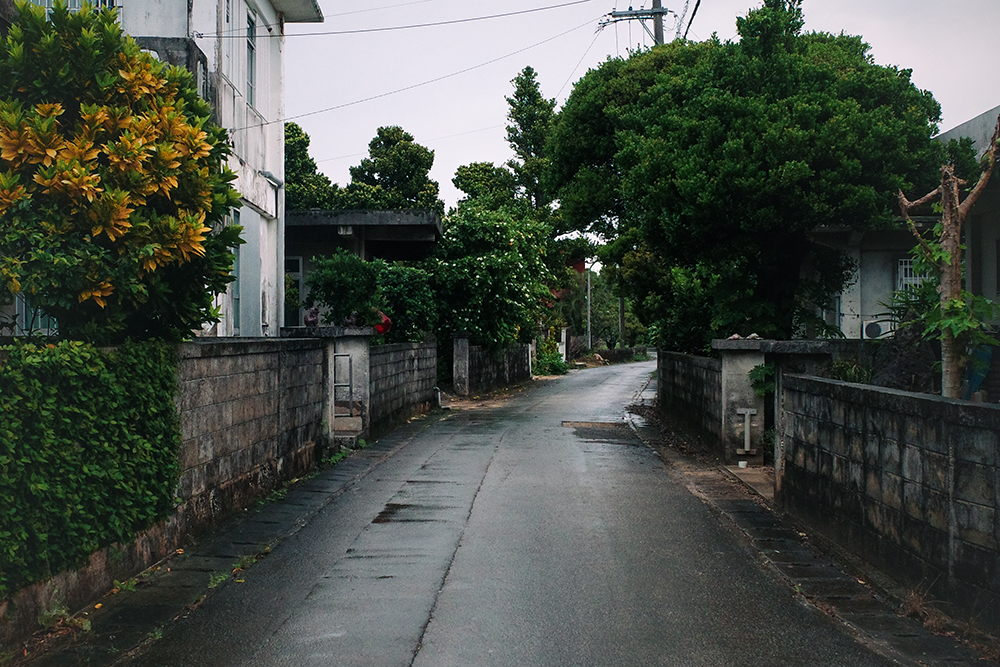
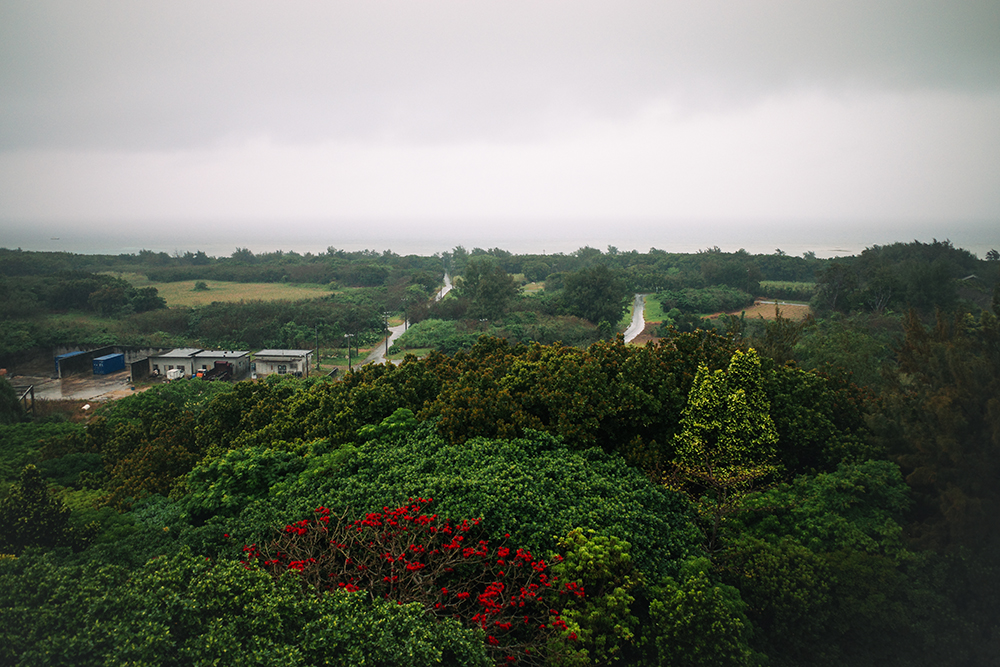
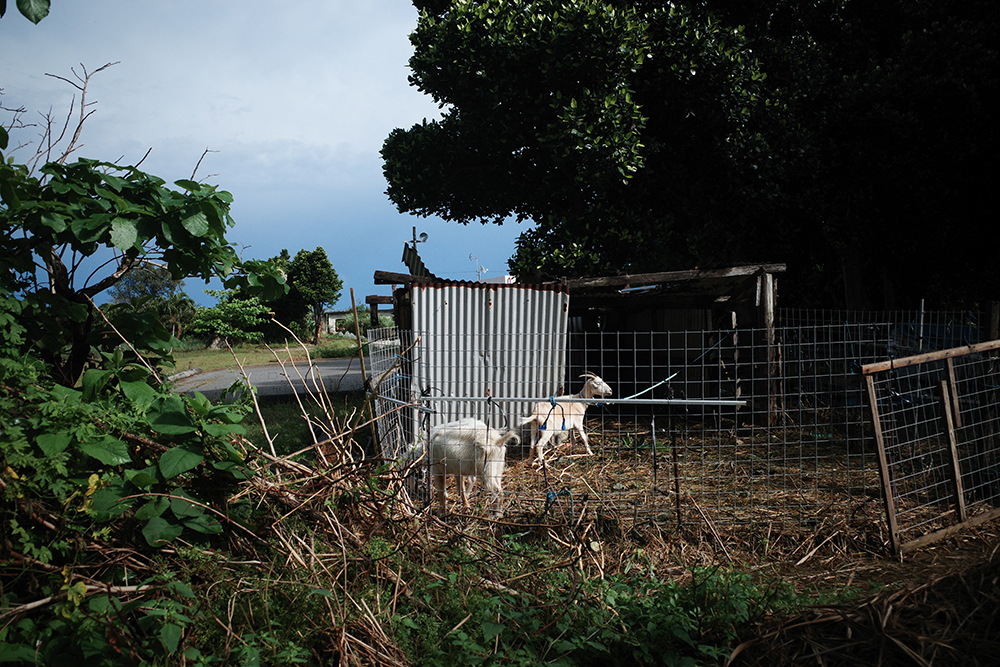
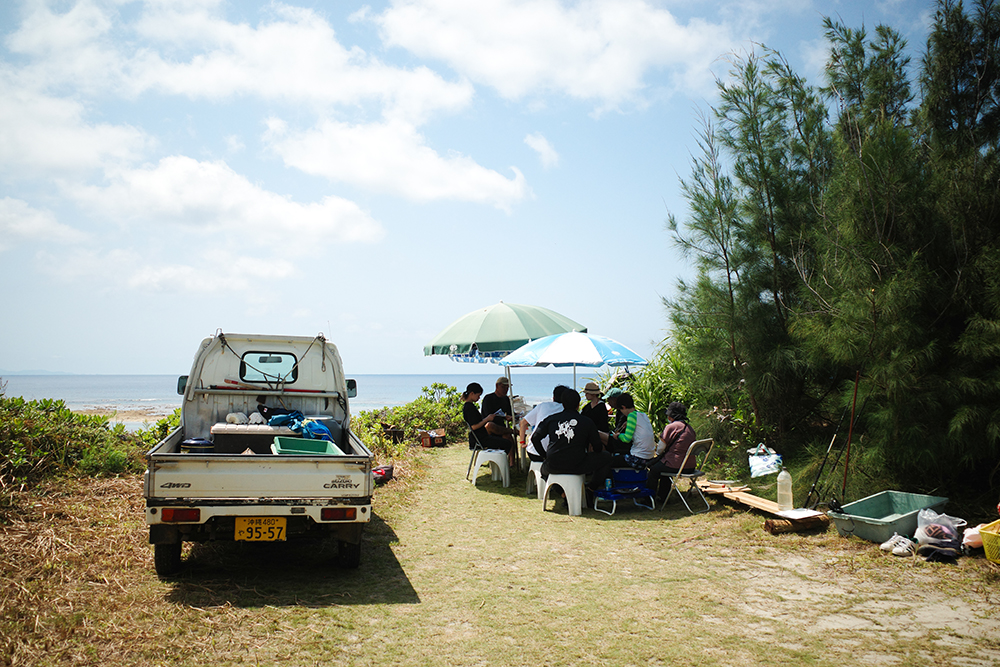
Tarama Village is a small island with an area of 19.75 km², and about 10% of the land is inhabited. It consists of two islands: Tarama Island, known as the “original compact city,” where the townscape is said to have been established over 500 years ago, and Minna Island, with an area of 2.15 km² and a population of only three people. Here, approximately 1,000 islanders live by sharing their limited resources and supporting one another with a spirit of mutual care and cooperation known as Fushanuhu. Among the many islands of the Miyako Archipelago, Tarama has a strong agricultural culture, and the temperament as well as way the local people speak are gentle. “If the speed limit is 50 km/h, Tarama people drive slowly at 40 km/h or less,” says Akiko Nobori, a former member of Community-Reactivating Cooperator Squad. That is also because they live by the principle of Fushanuhu, which means not only knowing each other's faces, but also each other's living, and helping each other every day.
In Okinawa, where popularity as a tourism destination is heating up and overdevelopment and overtourism are becoming problems in several areas, this village manages to protect the core of the “Tarama lifestyle.” That must be because the limitations to protect life on this small island are so apparent. Let’s find clues for the future that we should pursue in the daily lives of the Tarama people, who respect the wisdom of their predecessors and know the “beauty” of preserving limited resources and building on the present.
Interviewed in April, 2025