Ojika Town
Momoko Yokoyama
OJIKAPPAN
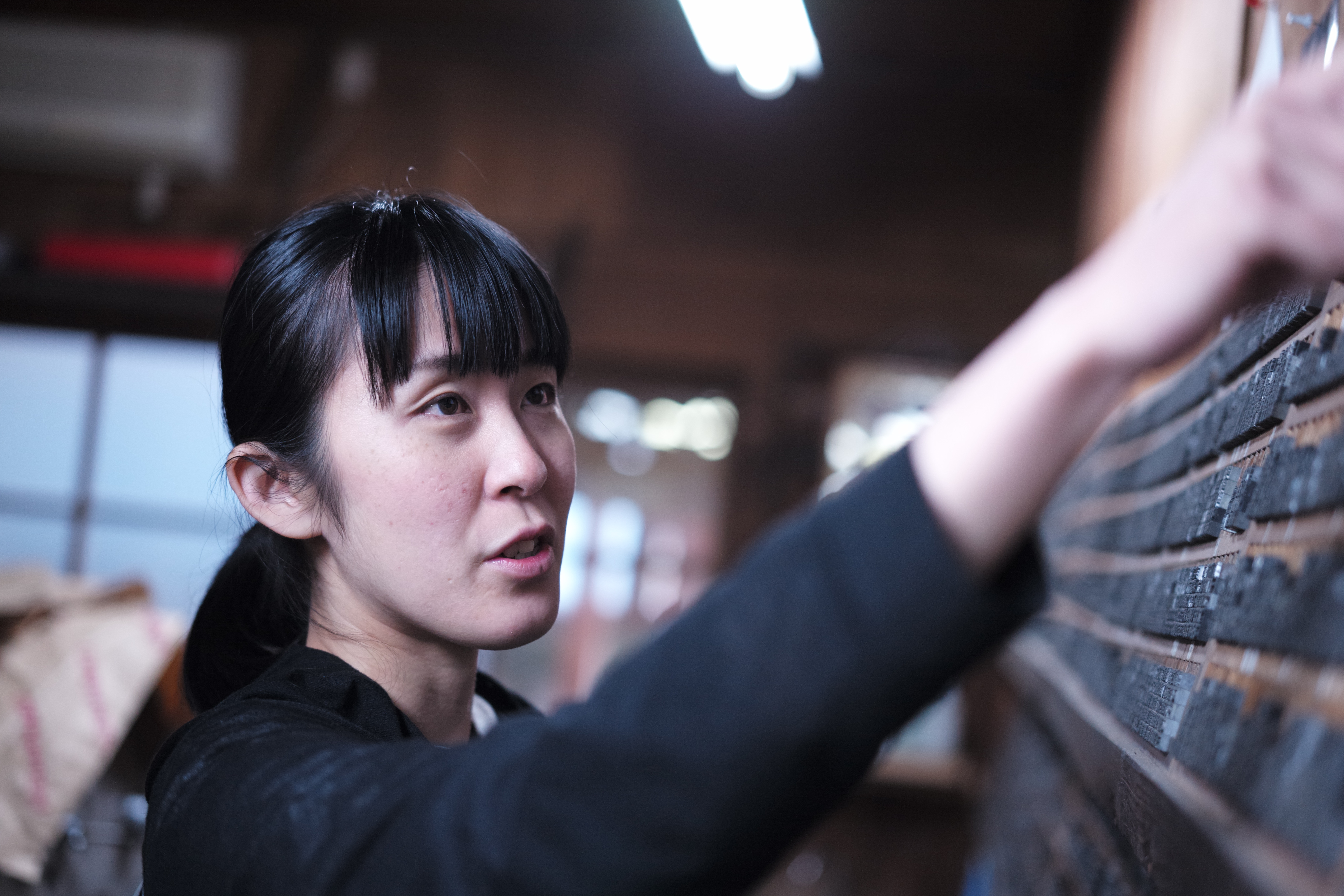
Momoko Yokoyama studied graphic design at a university outside the prefecture and returned to Ojikajima Island after working in Tokyo for a while.
She then jumped into the world of letterpress printing, which was her family business having been handed over for generations.
Recently she made her dream come true by opening her own studio.
Yokoyama tells the charm of Ojikajima Island through presenting new ways to enjoy letterpress printing to the world.
Telling the charm of Ojikajima Island to the world through letterpress printing
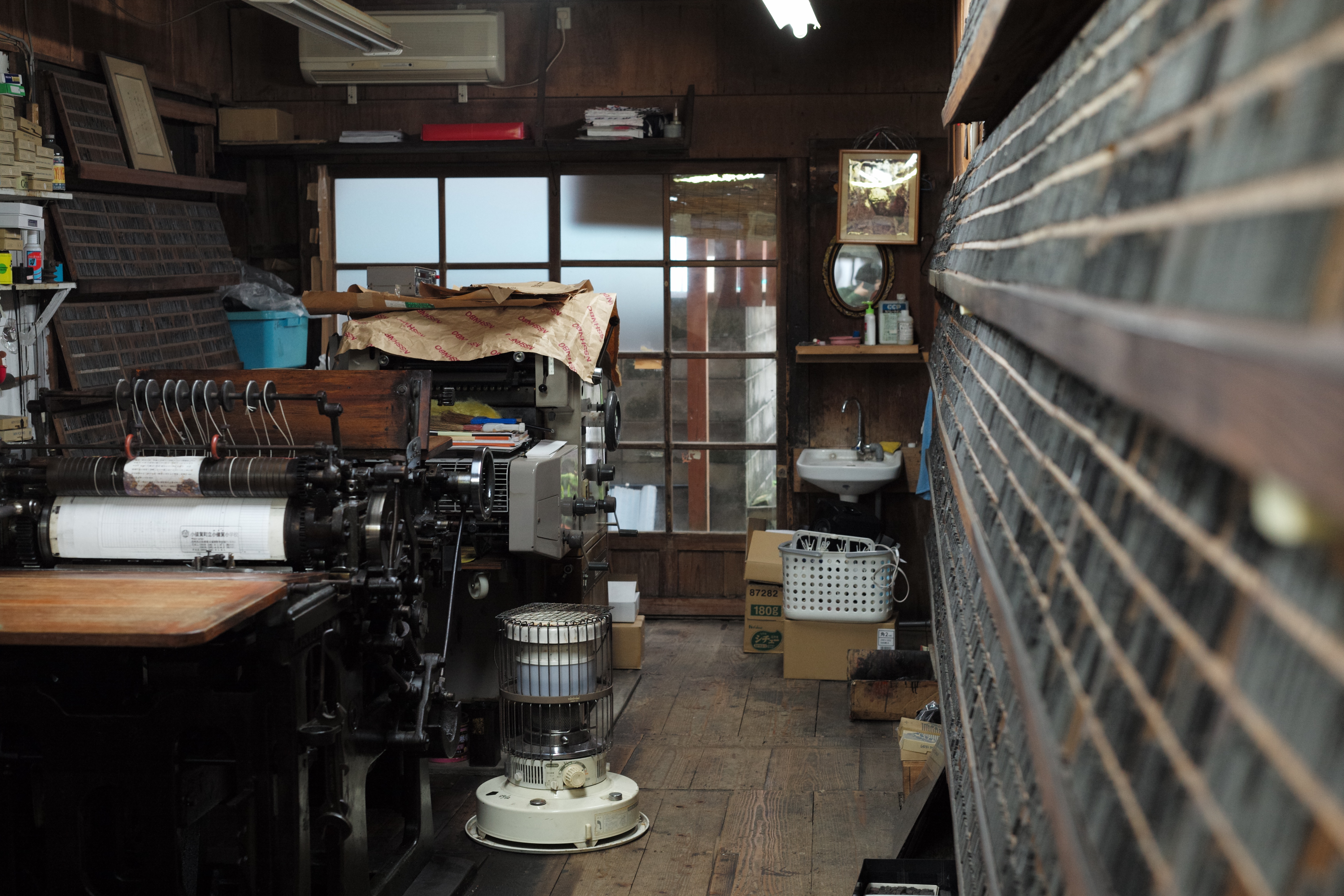
A 200-year old kominka or Japanese traditional house is both Yokoyama’s home and the printing shop with 100 years of history, Shinkosha. One step into the house you will be overwhelmed by the heavy and dull shine of lead covering the walls. A close look will show you that pieces of “type,” an indispensable component to letterpress printing, are being displayed by radical of Chinese characters and font size.
Letterpress printing requires manually operated, time-consuming process of selecting individual type letters. Seeing the final printed product can bring a sense of achievement. “Letterpress printing creates rich expression to the printed matter and that is the charm of this technique. The expression changes with how the ink and pressure are applied. The final product will never look fl at.” Yokoyama got attracted to such charm more and more. Letterpress printing can be challenging; you can set movable types unevenly or other way around by mistake. “But this very process of assembling the types one by one and working towards the completion is what never ceases to amaze me,” she says.
The business card printing is the service Yokoyama herself started. Printing business card requires Telling the charm of Ojikajima Island to the world through letterpress printing Momoko Yokoyama/OJIKAPPAN more time and effort, since every “plate” is unique to the customer. Amongst her customers are many young women and people working in design/creative industries. Yokoyama takes orders through the website but the visitors of the studio also often place orders right there. “Letterpress printing is not mere printing.’ Recent trend is to promote it as something that creates fashionable and attractive items,” says Yokoyama.
Her grandfather, the second-generation owner of the shop, often said that letterpress printing was a cultural business. “There is a kind of glamour to it.” In letterpress printing, inked, raised surfaces are impressed to the paper so when you touch the printed surface you can feel the embossed effect. Yokoyama thinks the essence of letterpress printing lies in this “tactile effect” and it is one of the reasons why this printing method regained its popularity in this age.
One of the Chinese characters for “letterpress” also means “continuous lively activities.” In the process of letterpress printing a continuous movement is involved from selecting types, composing a “plate,” printing, taking apart the types, and putting them back to the shelves. The essence of letterpress printing, Yokoyama thinks, is none other than this “types moving.”
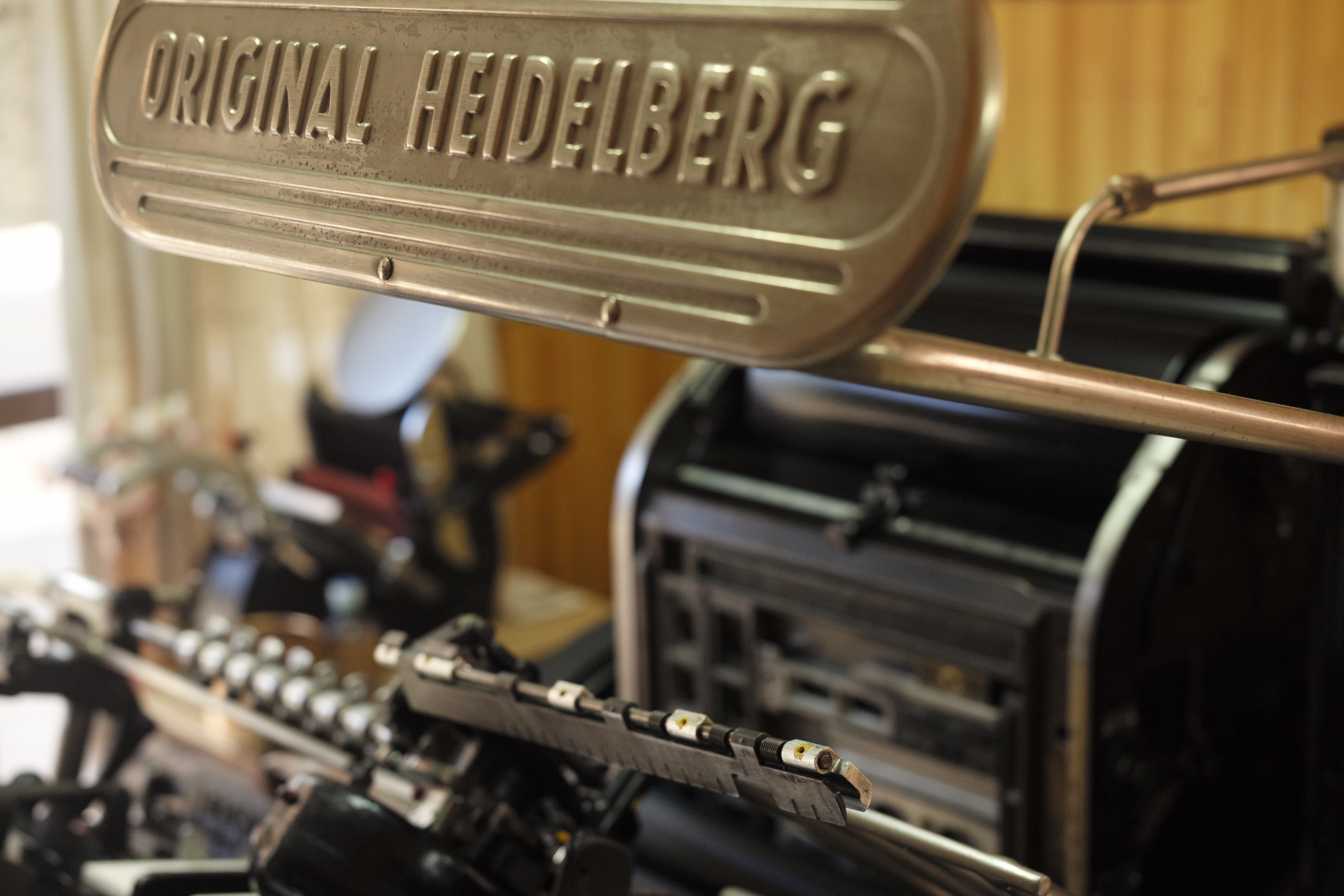
Yokoyama launched her own studio within the shop this year. She introduced the German printer Heidelberg, which was one of her long-term wish. The quality of German steel is excellent. It is hard and solid. Its stately silhouette is another beauty of this printer which, to Yokoyama, is “the world where steel is lively.”
One of her goals is to create a program in which visitors can experience letterpress printing combined with “kominka stay” to offer a way to enjoy Ojikajima Island. “The process of letterpress printing and the flow of time in Ojikajima are somewhat similar in that both being ‘slow’.” Business in the countryside cannot be realized without the countryside in the fi rst place. Yokoyama believes that if she always takes Ojikajima Island into account in her business, the island will naturally survive. “Another goal for me is to grow as a business owner; employ and nurture human resources.”
Interviewed in May, 2018
Writer : Hideko Takahashi / Photographer : Hiroyuki Tamura