NakanojoShigeru Machida
Chairman of Shirokubo Ochako Preservation Association
In the Middle Ages, “tocha” spread among samurai and nobles. It was a game to guess by drinking and comparing tea, but it banned because it was overheated and became gambling during the Northern and Southern Courts period. The culture of “ochako” that remains in Isama inherits its trend.
A town where the culture of “ochako” connecting people remains
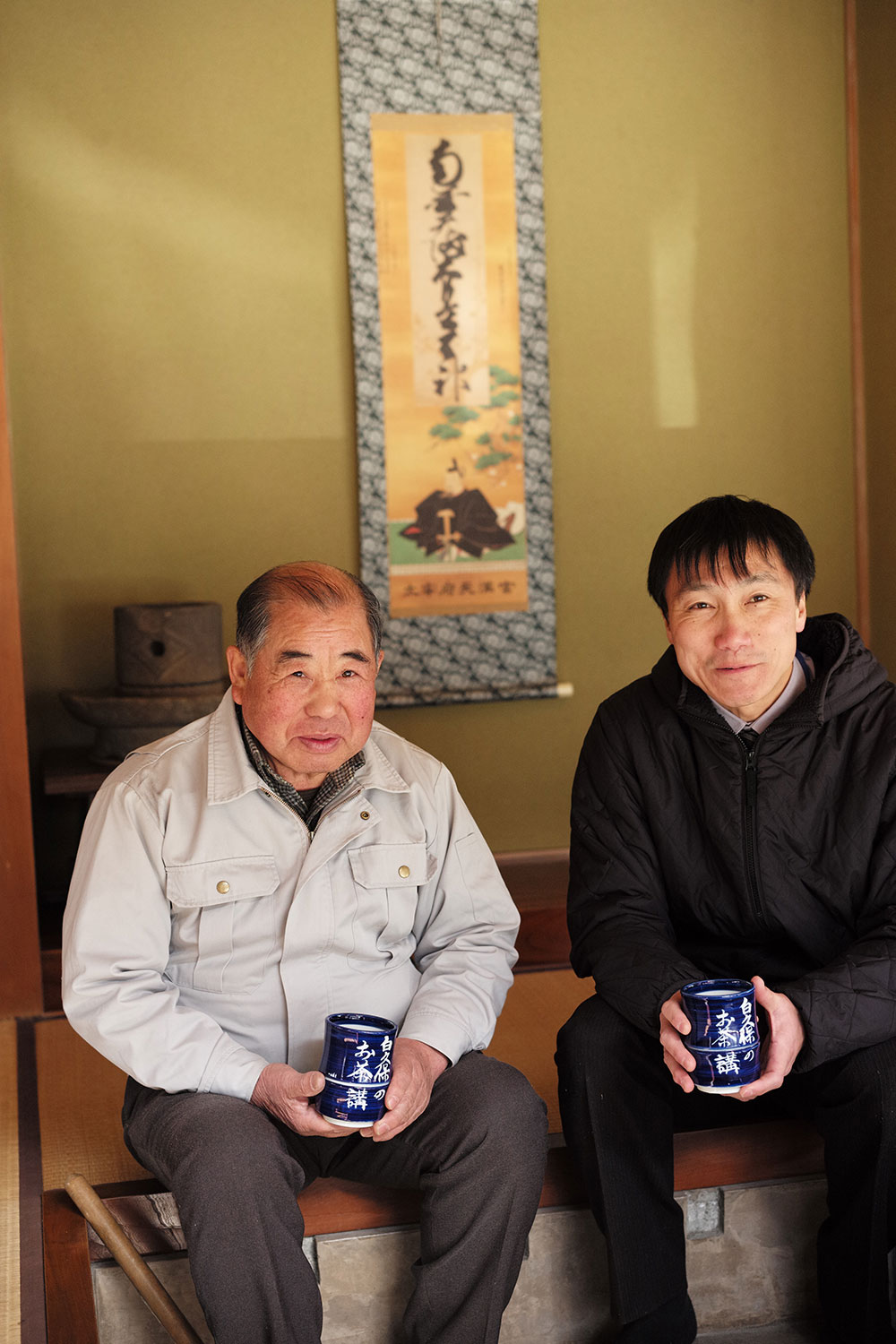
A thatched roof house used as a community hall in the Shirokubo district. This is the stage where ochako is held once a year. By the way, “ko” means “gathering” and ochako is “close together to drink tea”. The Shirokubo's ochako inherits the format of “tocha” (a game that guess the fragrance and taste of tea) performed in the Muromachi period, in the middle of the 14th century, and has been designated as an Important Intangible Folk Cultural Property of the country.
Originally, the tea ceremony was a samurai's accomplishment, so girls at aged 13 and older cannot participate in ochako held on February 24 every year, but anyone can participate in the experiencing events to be held to the general public, so participants come from across the country including Tokyo.
Three types of tea are used for mixing tea: bitter tea (sencha), amacha (hydrangea tea), and chimpi (dried tangerine). In advance participants should taste and remember the four types of blended teas that changed blending.
“In ochako, about 30 participants compete for drinking and guessing tea. Participant who answered correctly are given candy as prizes, but surprisingly children have a higher rate of correct answers. Not only children, but also adults get more heated than expected.”
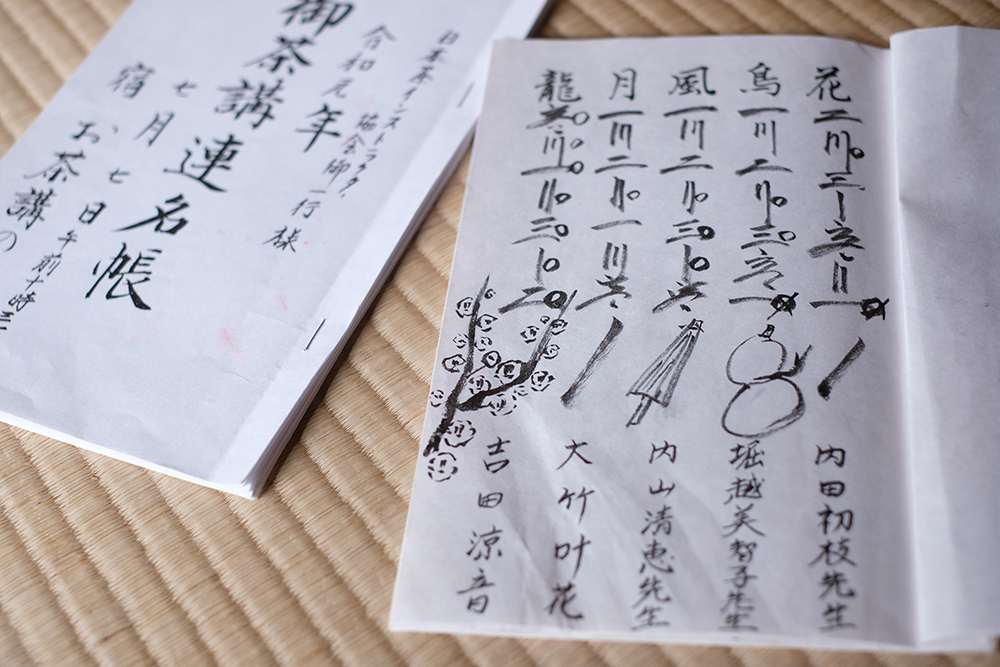
In the participant's list, “Ochako Directory”, all information including name and results is recorded with a brush. Unique thing is the name given to the participants only during ochako. The name is closely related to daily life such as “flowers, birds, wind, and moon” and “gold, silver, soybean, buckwheat, and green onion”. “In the beginning, tocha was a game that participants played with their social identity concealed, so they could play with those names such as flowers, birds, wind, and moon instead of their real name, regardless of rank,”
Interviewed in January, 2020
Writer : Hideko Takahashi / Photographer : Hiroyuki Tamura