Tsurui Village
Makoto Ando
Wilderness Lodge Hickory Wind
Travelling all around Japan four times during his college years, Makoto Ando came to realize that “the authenticity dwells nowhere else but in the countryside.” His philosophy and the way of living communicated through “a place of encountering and excitement” kick-start the engine in his guests’ spirits.
To cherish “small units” is important.
Born and raised in the city of Sapporo, Ando realized that “the authenticity dwells nowhere else but in the countryside” while he visited every corner of the provinces upon his motorcycle journey during his college years in the city of Sendai, Miyagi prefecture. It has been twenty years since he had opened Hickory Wind as “a place of encountering and excitement.” A professional photographer, nature guide, pottery buyer—the man with many talents even has a unique career of teaching history at a cramming school after he has graduated collage.
Over 70 percent of the people who stay at his lodge are repeat guests. Many young people visit sympathizing with Ando’s perspective on life and way of living. In the gallery space with warm wooden interior, he exhibits the world he loves: his lively photographs of wild animals, guitars he loves to play, hand-built motorcycles as well as bottles of whiskeys. His talent in photography is proven by the awards he received two years in a row from the competition Nature’s Best Photography Asia.
It has been 30 years since he had moved into Tsurui-mura village. The village of 2500 people has a history of choosing a path of independence in the form of separation rather than merger. “The mainstream of this modern age is to slash off wastes, focusing too much on efficiency. But nothing is a waste. Moreover there are values which are born out of continuation of doing something time consuming. One of them is trust. Living in Tsurui-mura is equal to ‘building up trust.’ Trust is born only out of continuation.”
An important aspect Ando thinks in living in the village is that the faces of the residents and producers are visible, knowing who made what within each others’ reach. Ando also feels that to cherish “small units” like the villages affiliated with “the Most Beautiful Villages in Japan” is important. To live in Tsurui-mura is “to work on building trust continuously as a small unit,” he says.
“In metropolitan cities people’s memory capacity is overflowed with information. Efficiency is more important than anything else, having priority over human spirit. That’s how metropolitan cities are.” He gives lectures at collages and companies throughout Japan under the theme of “natural environment and human beings.”
The food served at the lodge is cooked by Ando’s wife Shinobu, who is a certified Hokkaido Food Meister, which is the certification given to those with correct knowledge about the produce of Hokkaido and who are able to serve delicious food. Other than fish and meat, she particularly focuses on the natural flavors of vegetables. “I take extra care in drawing out the natural flavors of our vegetables.” The menu
items change according to the guests’ age and where they are from. There is not a single day when the same plate is served.
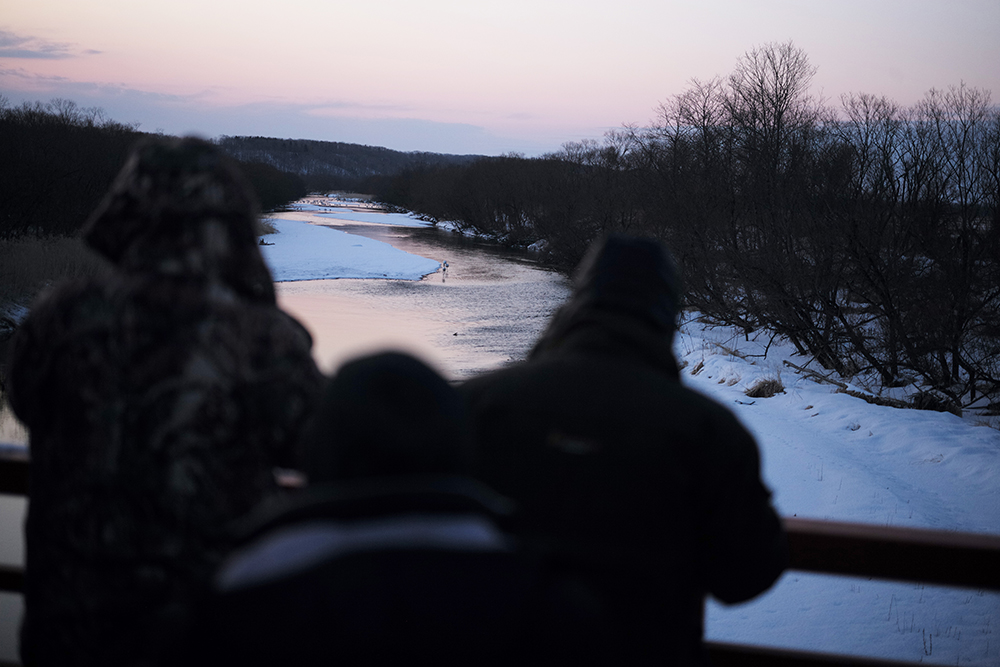
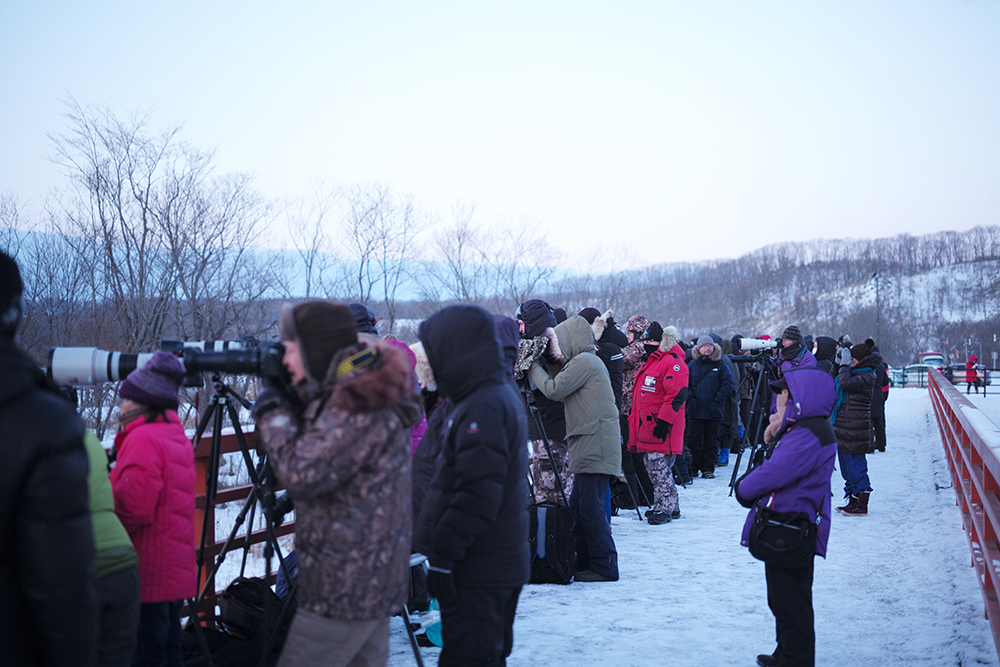
“Tsurui-mura literally means ‘the village where cranes are’ but more accurately, it is ‘the village where cranes chose to be.’ It is important to care about the village you live and to be able to respect those who are proud of the village. I can go on proudly talking about Tsurui-mura for at least a month.” Another important thing is to change how our children think about the village. “I don’t want to be one of those grown-ups who make children say they want to go live in Osaka or Tokyo when they’re older. They have a freedom to go out of the village but I need to make it a place where they want to come back. We must produce attractive villagers.”
The more severe the coldness is, the more beautiful everything in this village becomes and lives sparkle. The earnestness is essential in this village. “We can’t survive if we live idly by in this village. That might be the very charm of Tsurui-mura.”
Interviewed in January, 2018
Writer : Hideko Takahashi / Photographer : Hiroyuki Tamura