Hoshino Village
Genta Yamamoto
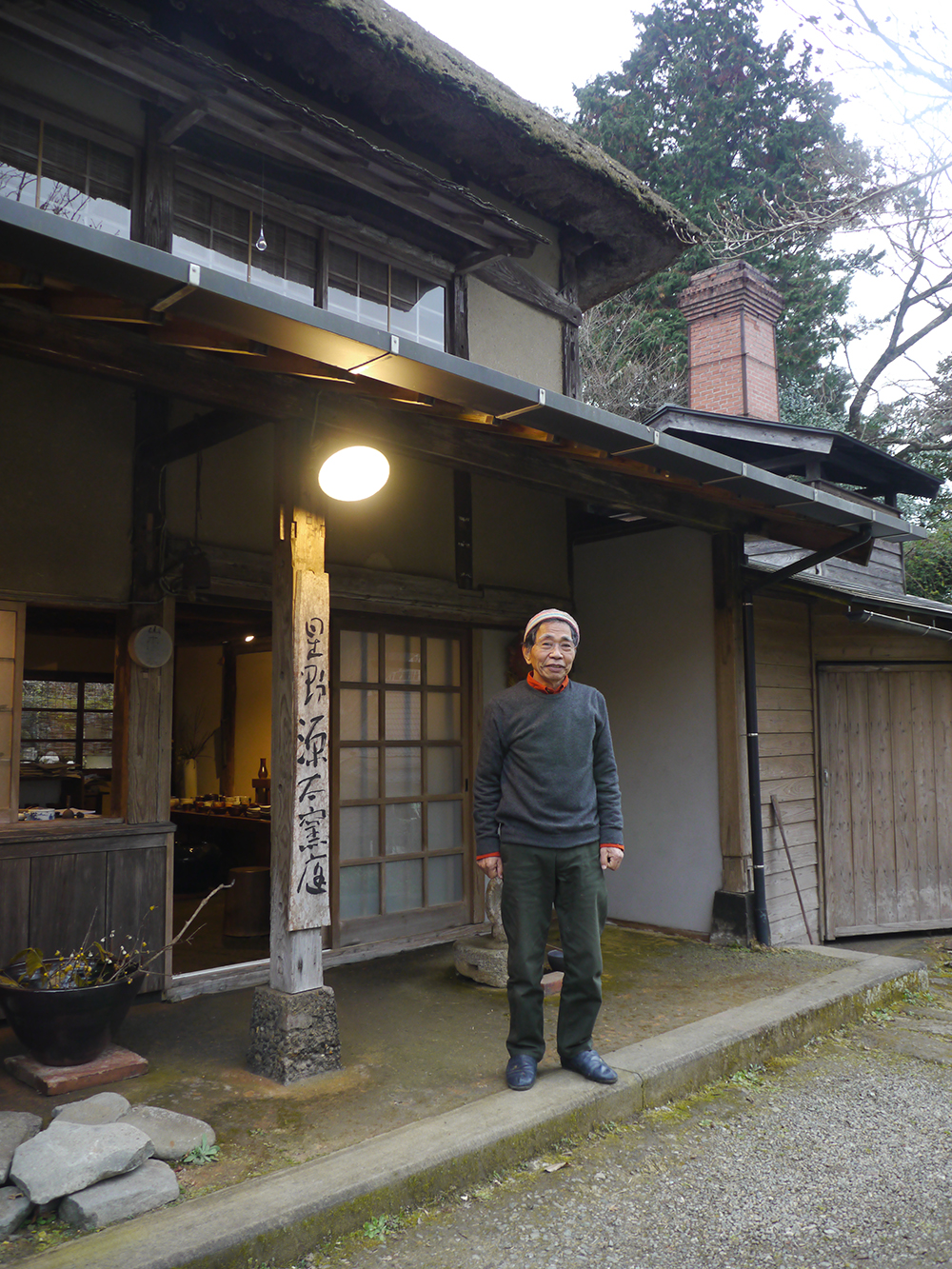
Genta-gama
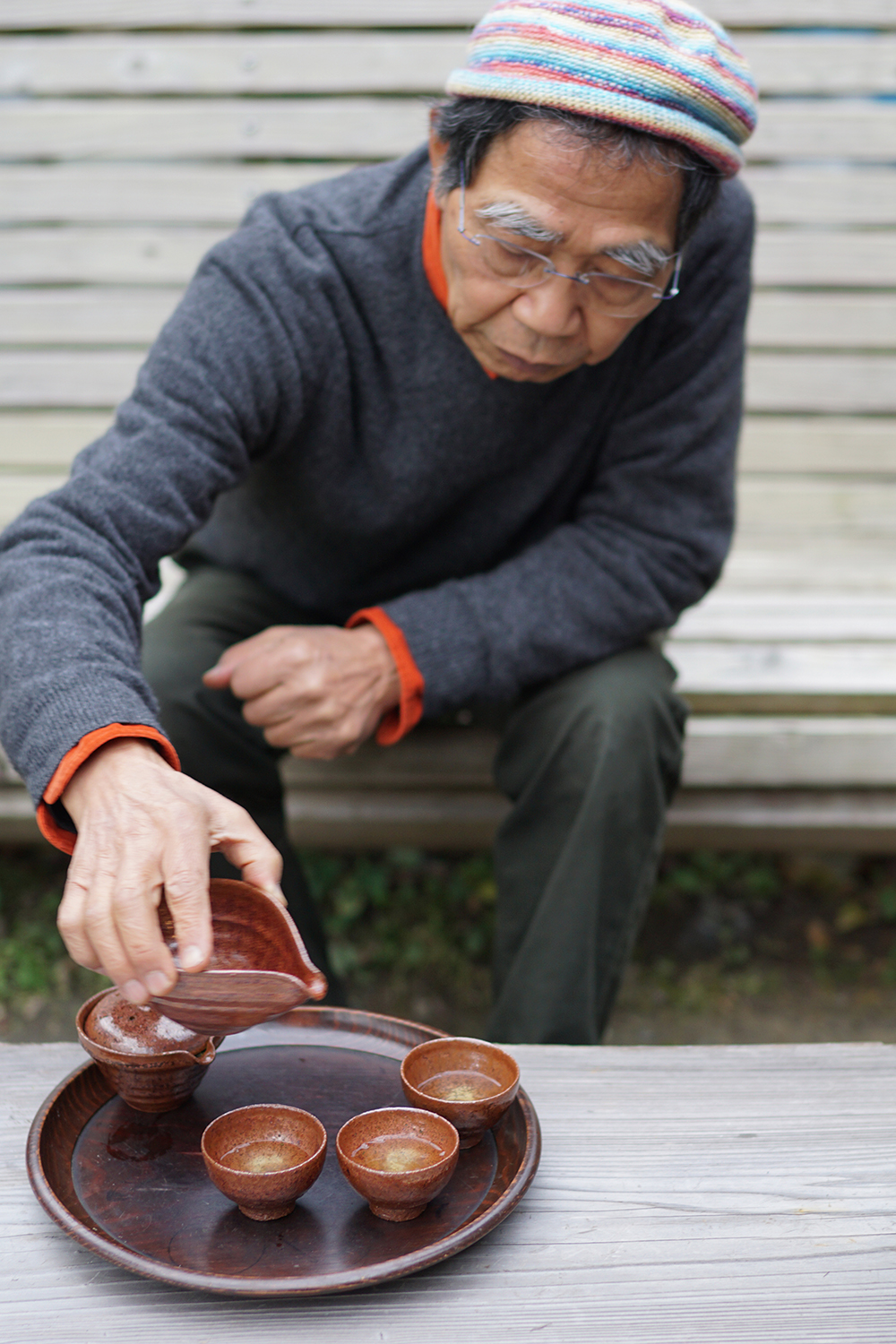
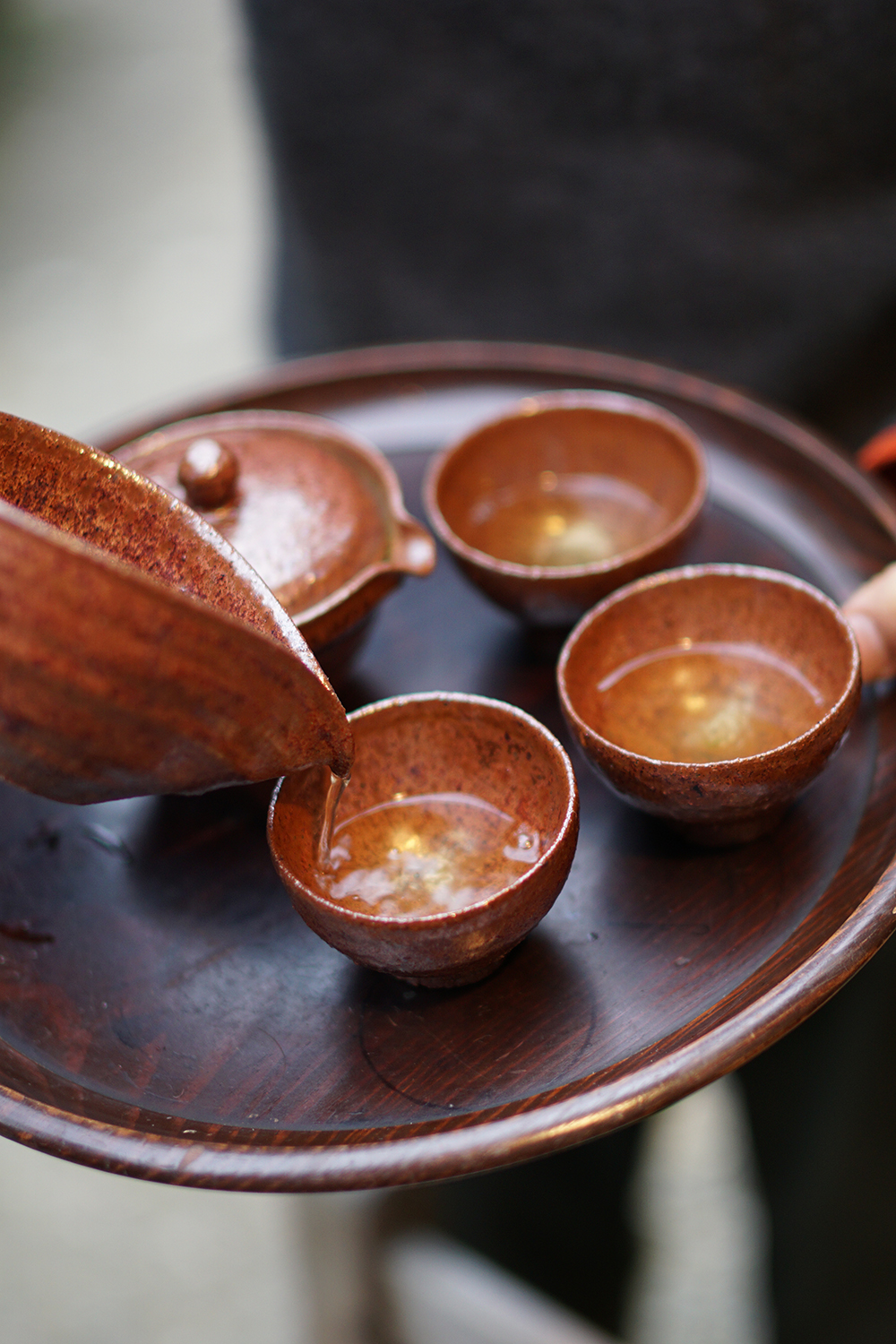
The earthenware is in deep shades of red, as if to reflect the ephemeral color radiated from the sunset. When the green tea or sake is poured into it, the liquid shimmers in gold and wavers by collecting subtle reflection of light and color.
Drops of green tea shimmer in gold, wavering in the sunset-colored Hoshino-yaki pottery.
The tan-colored tea cup seems to gracefully wrap the sheen in its core. When Hoshino Green Tea is poured in an accustomed manner, the cup is filled with golden light and gives beautiful scenery no words can explain.
Once in Edo period (between 1603 and 1868 in the history of Japan), Hoshino-yaki pottery was run as an official kiln of the Kurume clan. Because of the nature of its locality, the kiln produced tea jars to preserve tealeaves and tea utensils. However, when the last potter closed his business in the middle of Meiji period (between 1868 and 1912 in the history of Japan), the tradition of Hoshino-yaki pottery ended. 80 years have passed since then, when Genta Yamamoto revived the pottery in 1969.
The clue was in the idea that the land of Hoshino must have spontaneously created the form of Hoshino-yaki pottery. The glaze is something that is also unique to the land. The water running through the local river does not seem special at a glance but supports the creative steps of Hoshino-yaki pottery. It makes one’s experience so much
different to know the life power of a land as well as to know what you are taking from where, to be able to exist in each moment.
One day in this past winter, the village was visited by a heavy snow which pied up. Genta recalls: “There was a new-year party held in the neighboring village and I went outside to send everyone off. Then I saw the full moon beaming onto the snowscape. The moonlight shone onto the snow piled up on the branches, making them look like bonbori (Japanese paper lantern). I don’t know how others saw it. But to me the scenery was miraculously beautiful.” Another day of Genta in Hoshino village goes by, just naturally responding with the soil and nature.
Interviewed in January, 2016
Writer : Rika Tanaka / Photographer : Rika Tanaka