Abu TownFukuga Kagura Preservation Society
Takashi Kimura, Chairman and Hideyuki Yamamoto, Vice Chairman
Fukuga district is one of the areas with the highest altitude in Abu Town. With the closure of the local junior high school due to population decline, the traditional kagura deeply rooted in the Fukuga district now faces the risk of disappearing. However, in 2017, the “Fukuga Kagura Preservation Society” was established as a new organization to carry on this dance. With the motto of “Entertainment that will last for 100 years,” the society is passionate about preserving and developing kagura, incorporating innovative production techniques.
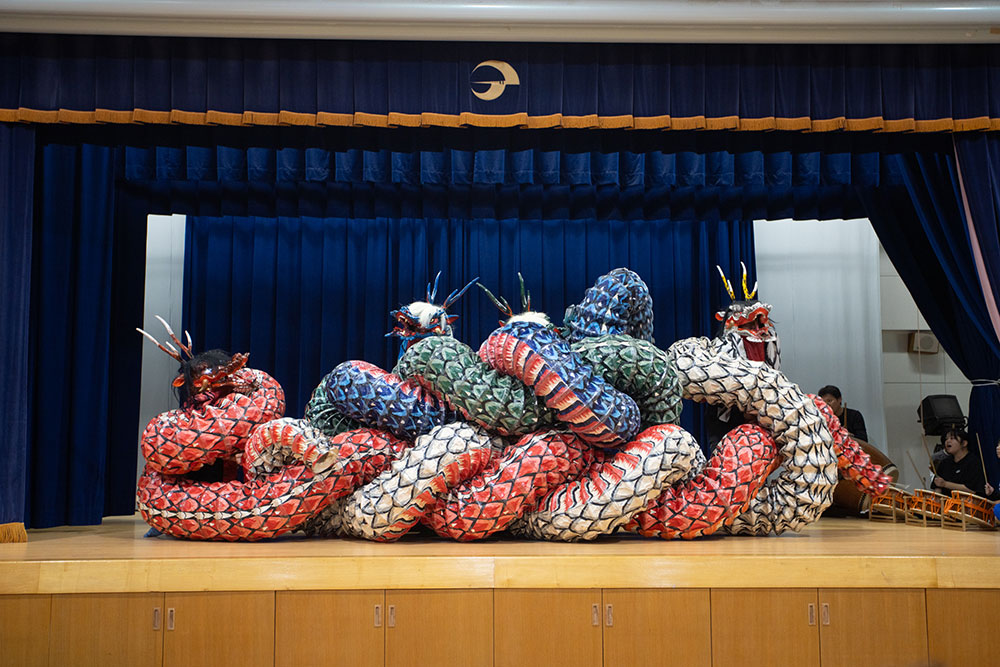
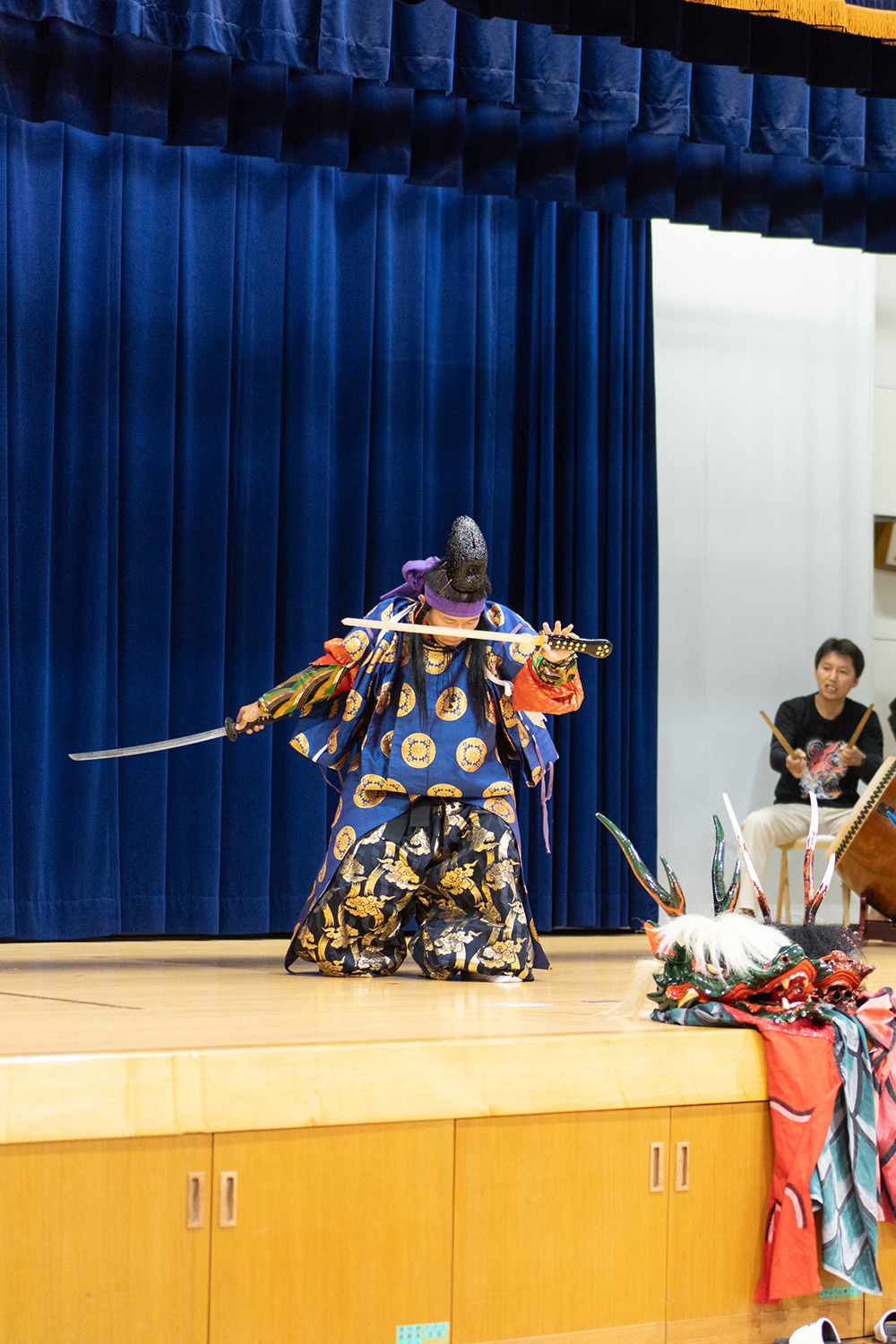
“Don-don-don-dodon...” the sound of drums reverberates at Fukuga Community Center at 8pm. On stage, four giant Orochi creatures swing their tails and open their mouths to attack Susanoo-no-Mikoto. Not to be outdone, Susanoo raises his sword to defend. Coiled, shook off, slashed... the powerful exchange has viewers leaning forward in excitement. This is the climax scene of “Orochi,” a representative piece of Iwami-style Kagura.
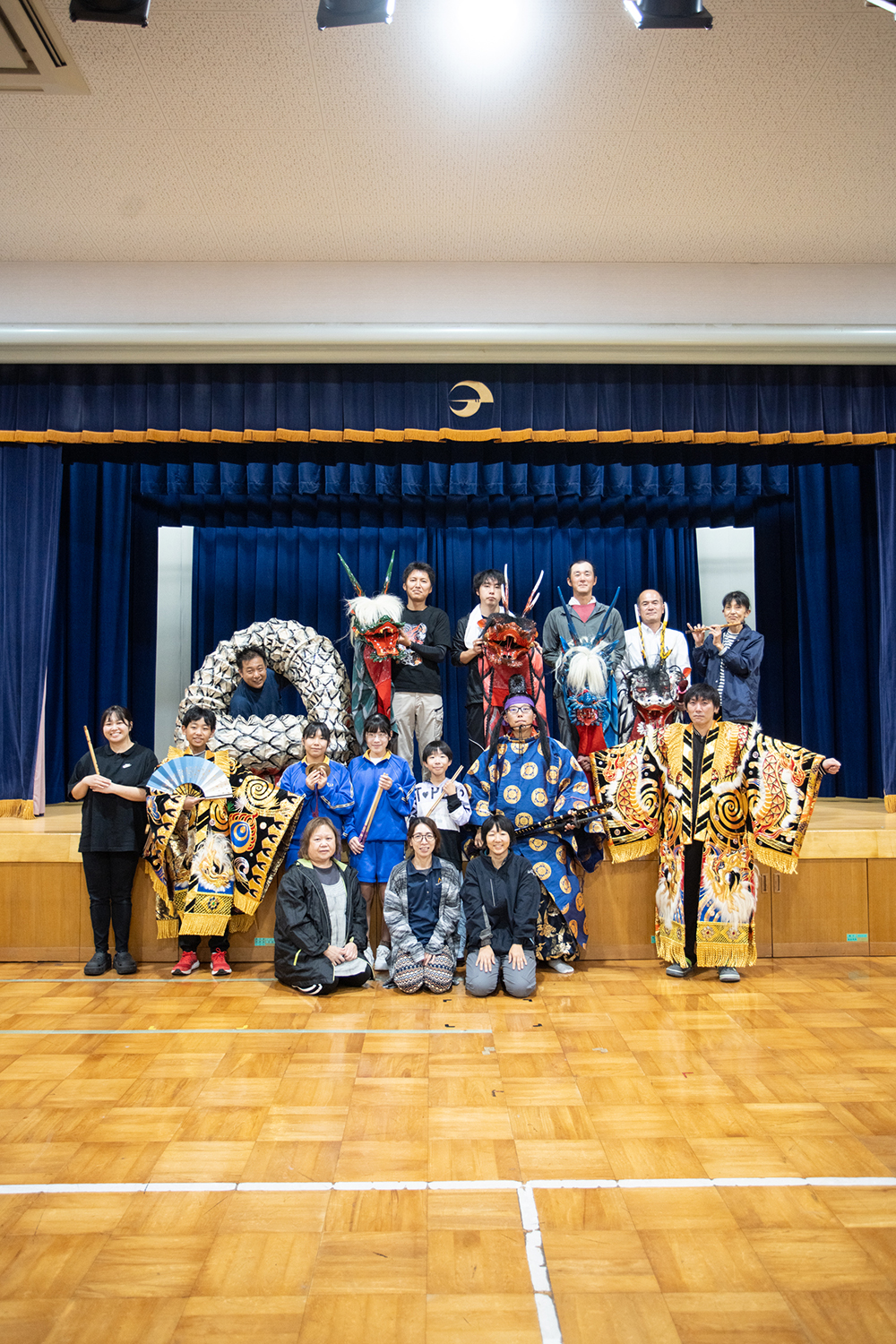
Chairman Takashi Kimura is the leader of the musicians, who calls out in time to guide the dancers as he beats the giant drum. Together with vice-chairman Hideyuki Yamamoto, who gave a passionate performance as White Orochi, who fights Susanoo to the end, he has worked hard to form the Fukuga Kagura Preservation Society.
“When I was in junior high school, I participated in the kagura tradition passed down in the Kanakoso district and became deeply engrossed in its charm. So when the middle school closed, Yamamoto and the others and I said to them, 'It would be a shame to lose it.' Luckily, we had the support of our seniors in the area, so we told those around us that we should try forming a new group.”
During this preparation period, an unexpected person at Yamamoto's home was showing strong interest in restarting Kagura.
“At the time, I happened to take my eldest son to see a Kagura performance in another region. That night, I thought I heard a sound I'd heard before in the living room, and then I saw my eldest son there, alone, watching the DVD I'd been given.” That same Shingo-kun (12 years old) is now one of the performers playing an important role. “The costumes and the way they danced were so cool, I thought I wanted to do it myself,” he says blushing.
And what is unique about the group is the policy of “not being limited to tradition, but making it into something that we think is cool.” Yamamoto laughs as he refers to Kagura from other regions and says, “We copy the performances and styles that we think are good!” However, this is also the evolution of all performing arts. In addition, instead of closing off their daily activities, they also organize experience programs for tourists upon request. With pride, seriousness, and fun. Thanks to their way of being, traditional Kagura has become entertainment, a foundation for connecting the community, and a tourist resource... and its meaning has expanded in many ways.
Interviewed in January, 2025
Writer : Mikiko Tamaki / Photographer : Eri Tokura