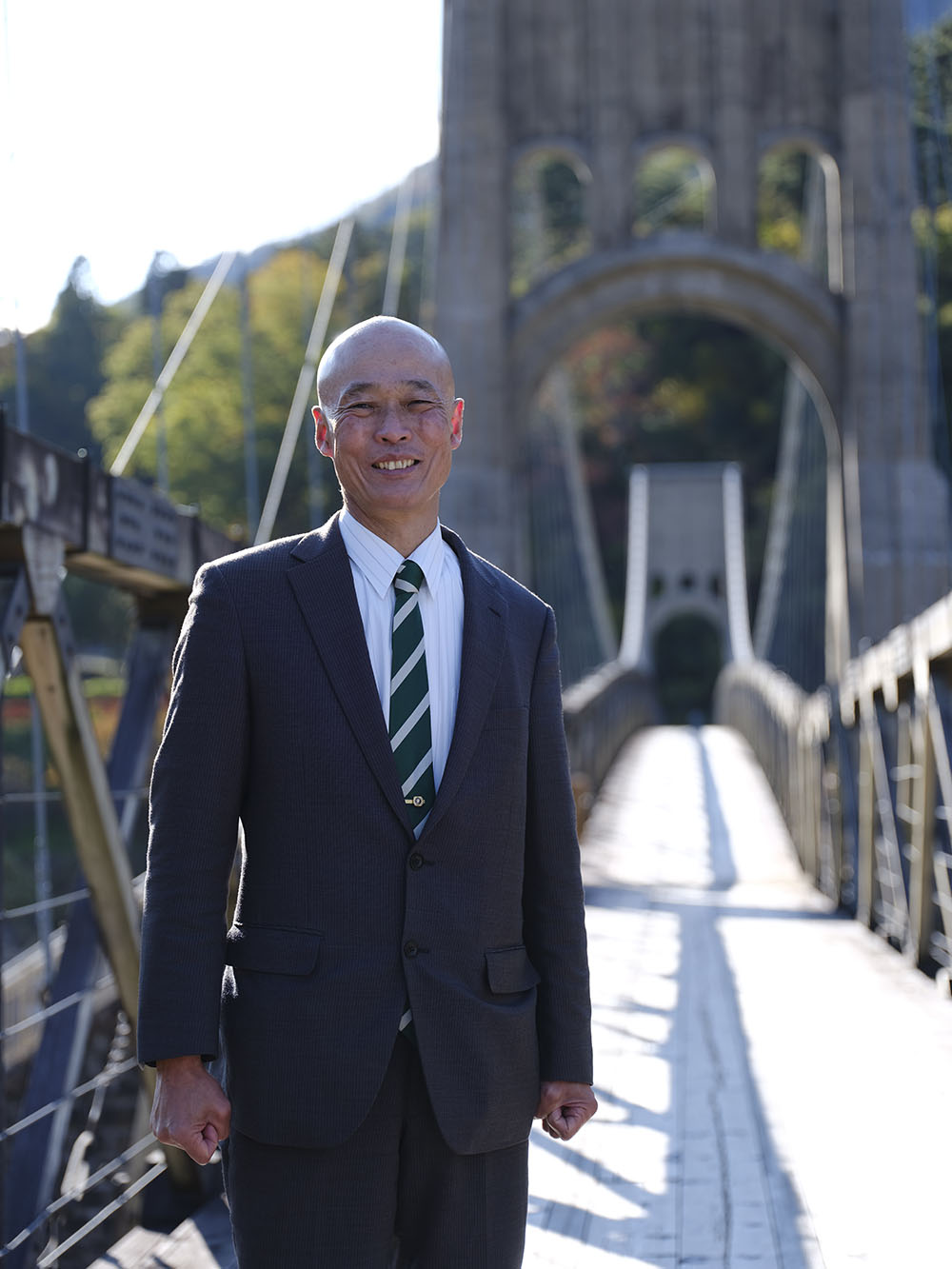
Nagiso TownHiroaki Mukai
Town mayor of Nagisomachi
Cultural diversity - Handing down the charm of this beautiful town to the next generation.
Nagisomachi consists of seven villages spreading along Kiso River and its tributary rivers. Three different villages merged in 1961 to make Nagisomachi. It was divided into even smaller villages in Meiji period (1868- 1912). It is difficult to explain the charm of the town in one word because each village inherits and protects its own history and culture: Tsumago is a famous post town, Tadachi has unique festival and kabuki cultures, Araragi inherits the woodwork tradition, and Kakizore is known for beautiful valleys. This diversity might be the charm of the town as a whole. Plant specialists evaluate this area highly because it is a borderline zone of polar and temperate zones which nurtures unique vegetation. The symbolic element of this town might be its “diversity” caused by “merging.”
I sympathize with the policy of The Most Beautiful Villages in Japan Association because it resonates with our mission to “protect and hand down the charm of our land.” For example, Tsumago-juku is known as one of the pioneering villages that works on townscape preservation. The project is characterized not only by its innovative nature but also by the fact that it works on preserving surrounding mountains, along with the townscape, meaning, everything visible. We believe the purpose of preserving Tsumago’s townscape should not be for tourism but purely for its beautiful landscape because the tourism will follow as a result. The townspeople love Tsumago and think about the value and the meaning of preserving it which becomes the power of the project: preserving, nurturing and handing down the townscape into the future.
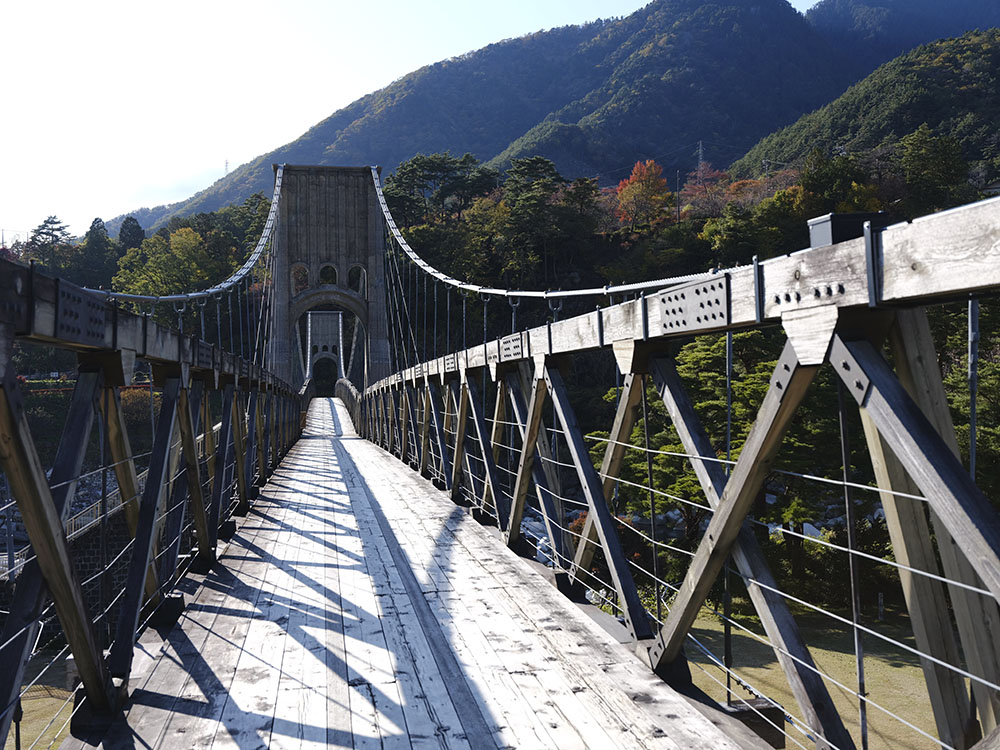
I went to school in Nagisomachi from elementary school up until high school. . My father’s occupation made us move around thus I experienced changing schools as a child. I lived in Tokyo as a college student but decided to move back to Nagisomachi when I did a part time job in summer at a townhall here. It was not like I made a big decision coming back. Still, living here is comfortable. My favorite landscape is the dry riverbed of Kiso River with big granite stones. Nagiso suffered debris flows, which we call Ja-nuke (meaning “the runoff of the king snake”), numerous times. It is a land blessed with nature but also being damaged by it too. Maybe that is why, for me, I cannot talk about Nagiso without granite. I feel strangely emotional looking at it.
Interviewed in October, 2020
Writer : Mikiko Tamaki / Photographer : Kenta Sasaki