Mishima TownYoshinobu Igarashi and Tomeko Funaki
Seikatsu Kougeikan
Seikatsu Kougei Undo (literally, Daily Craft Movement) began as part of Mishima Town’s Furusato Undo (literally, Hometown Movement): a regional development program. The Seikatsu Kougeikan has served as a base for conveying the value of and passing down handicraft techniques that have continued in the daily life of Mishima.
Craftsmanship that creates a more personalized connection between the creator and consumer.
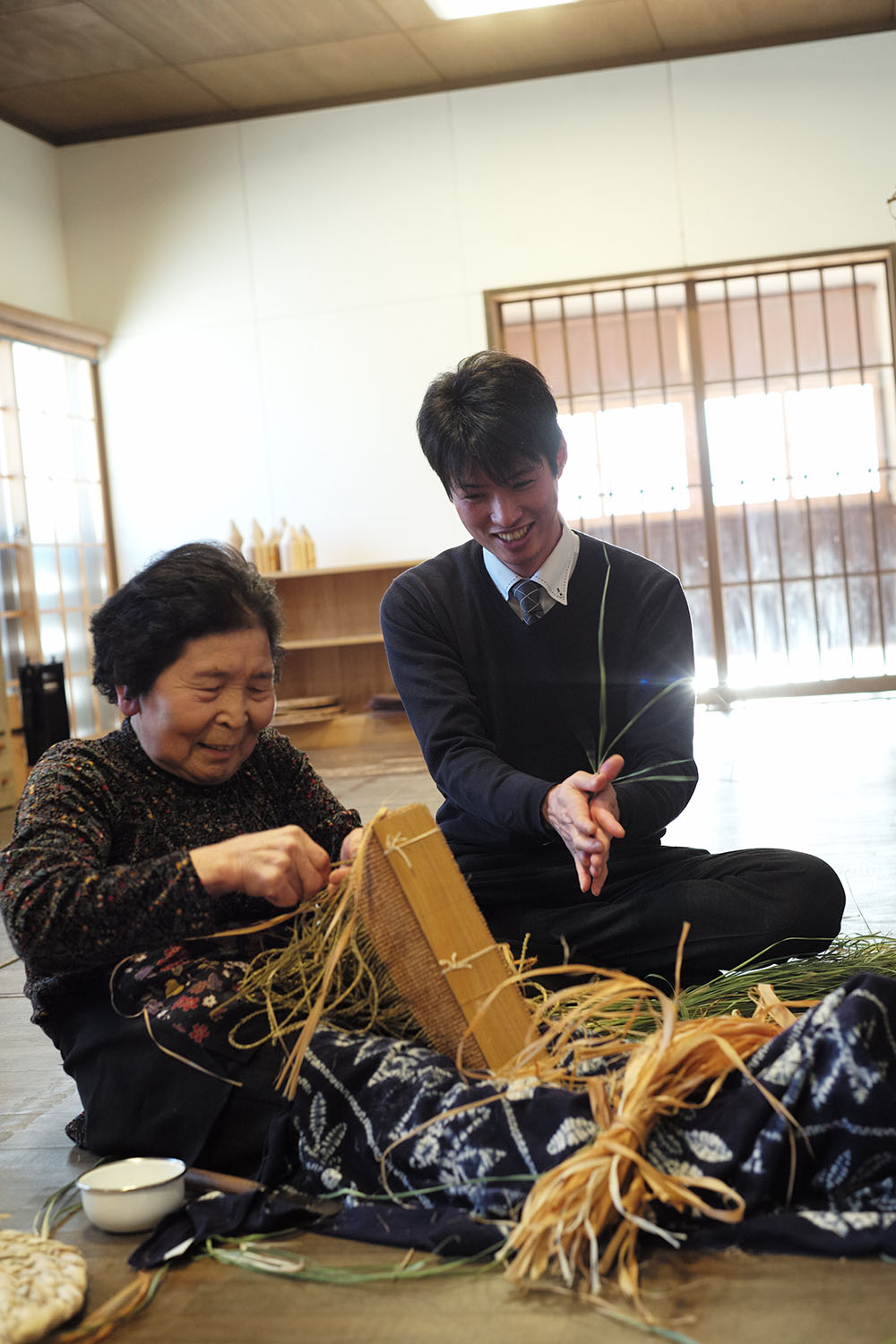
A woman came into a wood-paneled room bathed in soft sunlight, carrying a large package wrapped in furoshiki. Inside it, there were dried plant leaves, metal fittings, and other items that appeared to be in the process of being made. After carefully arranging each of these items, a demonstration of Okuaizu Braided Crafts began.
“This is hiroro, and this is mowada, the bark of a linden tree. I'm going to show you how to weave hiroro now, so watch carefully, because you will be doing it next.”
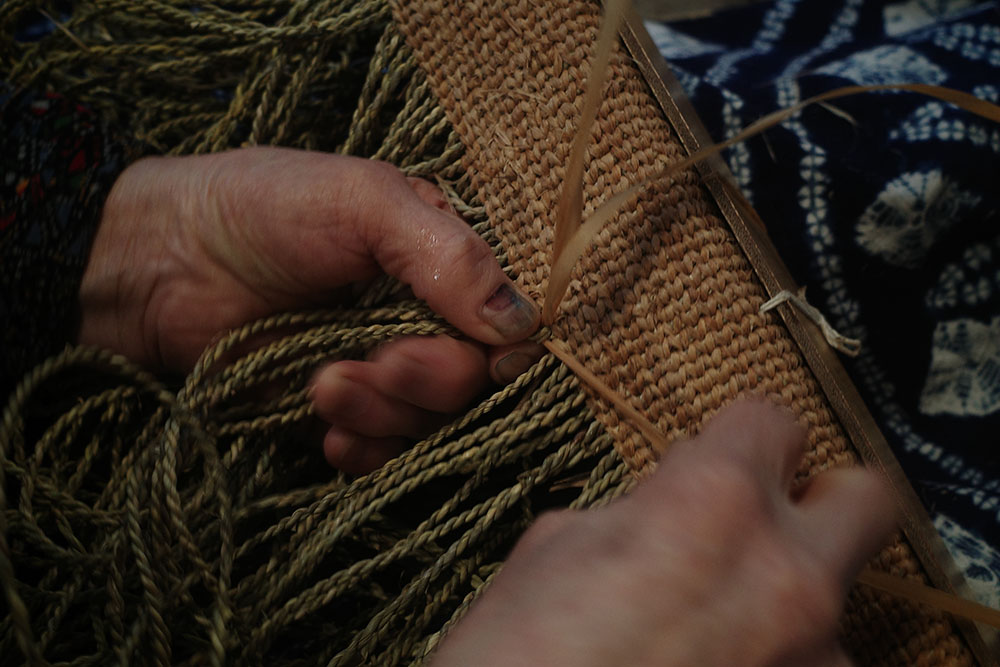
As soon as she said that, she held the leaves between the palms of her hands and began to twist the small ropes with a rhythmic rustling sound. It was so neat and beautiful. “If there are not more than 20 twists in a 10-centimeter length rope, it cannot be used for braided crafts. And when you want to make a bag, you have to weave 64 meters of this before you can start.” Within minutes of meeting her, I was overwhelmed by the skills of Tomeko Funaki, a traditional craftsperson.
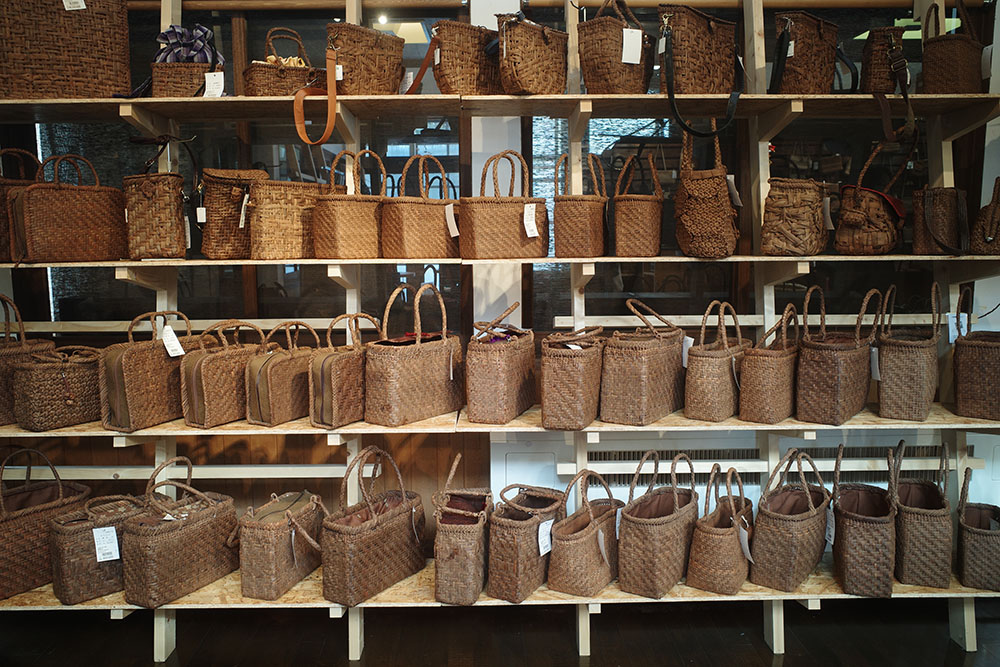
Mishima's Seikatsu Kougei Undo began in 1981 began in 1981. Five years later in 1986, the Seikatsu Kougeikan was built as a base facility for this movement. In addition to being a place where visitors can casually experience craftsmanship, the museum also serves as a place where local koujin (craftspeople) exhibit and sell their works, and as a studio where they devote themselves to their crafts. Furusato Aizu Koujin Matsuri (literally, Hometown Aizu Handicraft Festival) and other sales events are held in the vicinity, attracting many handicraft fans from all over the country.
But what was the "daily craft movement" in the first place? In Okuaizu, a region with heavy snowfall of more than two meters every winter, crafts were practiced as a winter job, not as means to sell products, but as an everyday activity in the mountain villages. “Even if the materials and techniques are different, this kind of culture must have existed everywhere in the past," said Yoshinobu Igarashi, the director of the museum. Indeed, there are handicrafts that make use of the local climate in each region of Japan.
However, in the 1980s, many of the tools of daily life had already been replaced by mass-produced industrial products. In many cases, traditional techniques disappeared because they were too common to the people and were neglected. Mishima was in a similar situation in the past. "There was a time when zori (braided thong sandals), which had been painstakingly made, were sold for 500 yen each," says Igarashi. However, the industrial designer Kiyoshi Miyazaki*, an advocate of the daily crafts movement, and others reevaluated the value of handicrafts taking into account their history dating back to the Jomon period. They developed a movement to create products that fit into modern life and to provide opportunities to directly connect with customers. As a result, the art of living has developed into a traditional craft that is loved and sought after by many people. The "Okuaizu Braided Craft" was the first farmer's craft to be designated as a national traditional craft, and many of its makers became active as "traditional craftspeople.”
As a town official, Mr. Igarashi was closely involved with the craftspeople who played a leading role in this movement. “I have many unforgettable memories of those masters who are now deceased. For example, Bungo Igarashi, a matatabi (silver vine) craftsman, who even at the age of 90 still took great pleasure in making things with his hands while thinking of the people who would use them and hearing the joy. I, too, naturally think of Bungo when I use his rice hopper. I believe that the exchange of things that make us think of each other in this way is one of the great values of daily crafts which cannot be replaced by money.”
*Later Professor Emeritus, Chiba University
Interviewed in January, 2023
Writer : Mikiko Tamaki / Photographer : Hiroyuki Tamura