Nakasatsunai Village
Rokka-no-mori
Rokkatei Confectionery Co. Ltd
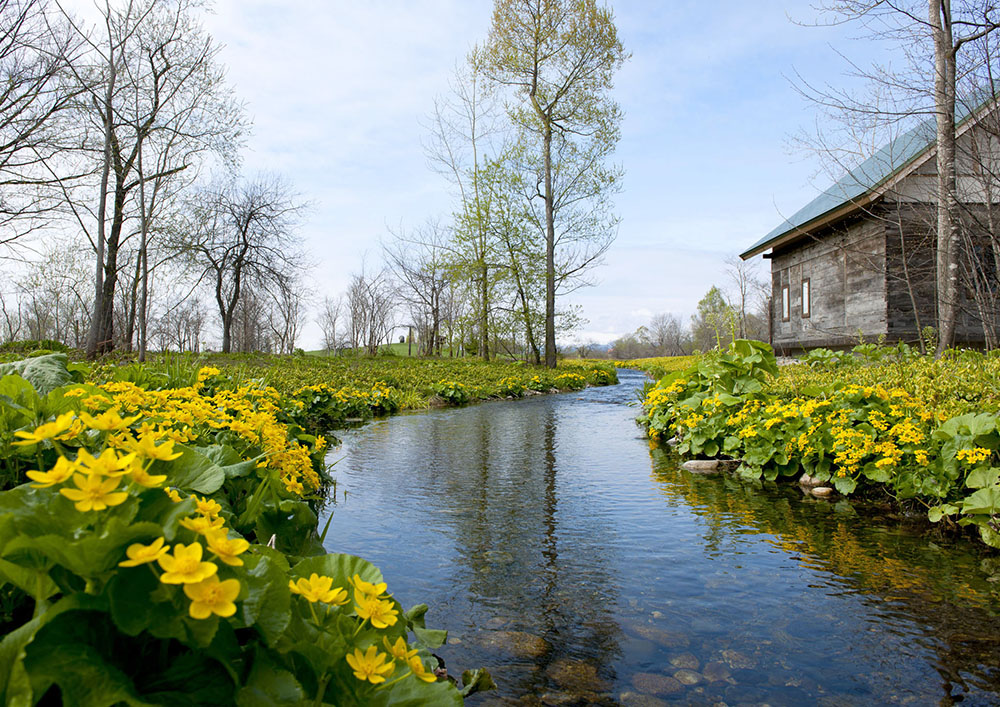
Nakasatsunai Village has long focused on the promotion of culture and art in harmony with nature as a ‘village of flowers, greenery and art’. Nakasatsunai Art Village, Sakura Rokka Park and also here at Rokka-no-mori (the forest of Rokka), Rokkatei has been promoting the creation of places where the local climate and art resonate with each other, with the same perspective used for making sweets.
Rokka-no-mori is the most popular sightseeing spot in Nakasatsunai Village and a place of recreation for local residents. This interview was conducted at Rokka-no-mori factory, which is located right next to Rokka-no-mori. This is a facility used exclusively for production and is not a place for spectators or tours. Despite this, we couldn’t help but notice the lovely and beautiful bronze sculptures used to mark the powder room in the middle of the corridor.
“You found it? That sculpture was made by sculptor Masaru Bando, who made the work on top of the hill in Rokka-no-mori.”
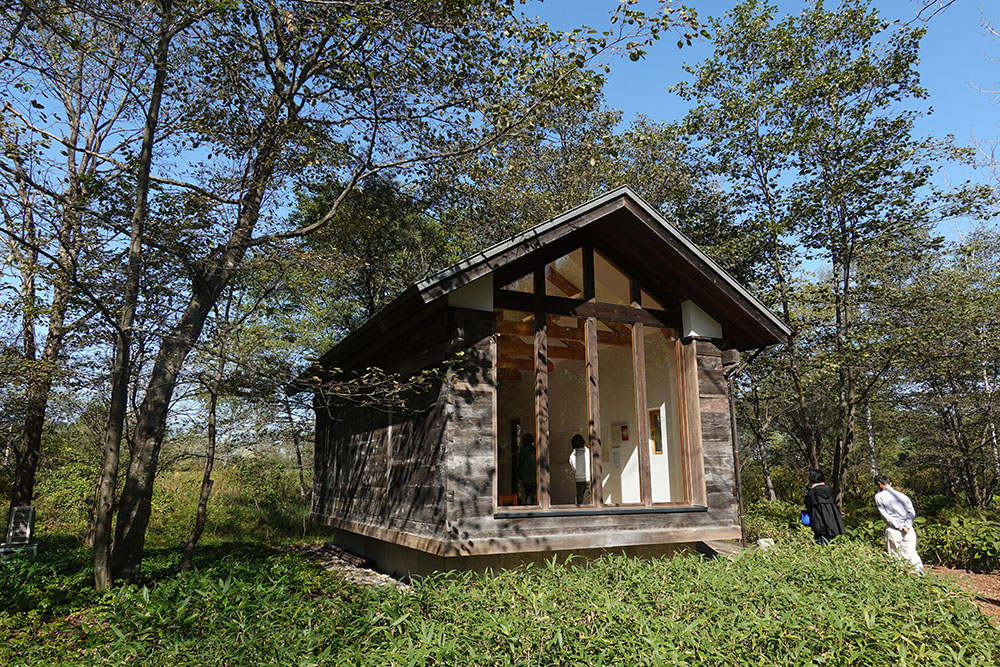
The more we hear about these kinds of episodes, the more we understand why this company decided not to reclaim the forest area where the factory was to be built some 40 years ago, and instead used it to create an ‘art village’. In 1992, Naoyuki Sakamoto Memorial Museum (now Nakasatsunai Art Village) was first opened in a grove of oak trees. Rokka-no-mori factory was completed six years later.
While searching for a factory site at that time, we came across the virgin forest that is now the Rokkatei Art Village. At first we came up with the idea of ‘building a factory while also preserving the oak forest’, but eventually we instead decided ‘rather than building a factory, why not make the whole site a space that the public can access’, which lead to the opening of the Sakamoto Naoyuki Memorial Museum.
This may make sense after getting to know Rokkatei and seeing the factory and Rokka-no-mori, but it is probably too far-fetched an episode from a business management perspective.
“From a general point of view, I think it was a very bold decision. However, one of the fundamental concepts this company was founded on was the desire to ‘preserve the local climate’. This comes from our company’s history of making confectionery while yearning for the kind of history and culture that has continued uninterrupted in Europe. On the other hand, we are also aware that Hokkaido does not have a history like Europe, so we have focused as much effort as possible on ‘creating a foundation to build on’.
I think it was with this in mind that when the then president saw that oak forest, he thought he must protect that precious original landscape.”
A major factor in this idea of ‘preserving the climate’ and making art an essential element was the encounter with Naoyuki Sakamoto, who has drawn the design for Rokkatei’s iconic wrapping paper. As mentioned above, the first museum (memorial hall) built in the village was named after Sakamoto Naoyuki, and one of the goals of Rokka-no-mori is to “recreate the world of Sakamoto’s wrapping paper in reality”.
The company believes that, although confectionery and art are seemingly unconnected, they are both not essential for a person’s survival but both are indispensable in fostering the human mind and richness of thought. In our company, ‘making delicious sweets’ and ‘creating museums and parks that make the most of the climate’ are both on the same line in terms of identifying and protecting the essentials.”
In his interview, the village mayor also mentioned that in the culture and arts promotion business, he keeps in mind the words of Rokkatei’s previous president, Yutaka Oda, “We value universality”.
“I am grateful for that. In the world of confectionery in particular, there are a lot of glamorous things, and it is easy to think that trends are constantly changing, but what is important for us is to keep ‘universality’ and ‘essence’. For example, in product development, we don’t start with the idea of ‘something new’, but rather from a place of considering whether the quality of current products has declined and whether we can make it better. Then, when we finally decide to launch a new product, we are particularly conscious of ‘whether it tastes good enough to eat every day’ and ‘whether it is a confectionery that can only be made here, with a connection to Hokkaido and Tokachi’, while also looking for new ideas in our existing recipe stock.
In the same way, in art, as we want to continue to build on our history, the 'things that will remain' we are looking for are not flashy, but simple yet essential. In this way, we hope to steadily build up a history in Nakasatsunai Village, which we have a connection with, in terms of both confectionery making and art."
Interviewed in October, 2023
Writer : Mikiko Tamaki / Photographer : Hiroyuki Tamura