Tarama Village
Tarama Village Youth Council
Katsuichi Kushi,
Nami Oshiro,
Noriyuki Hokama
"Fushanufu"—A Treasure Without Form
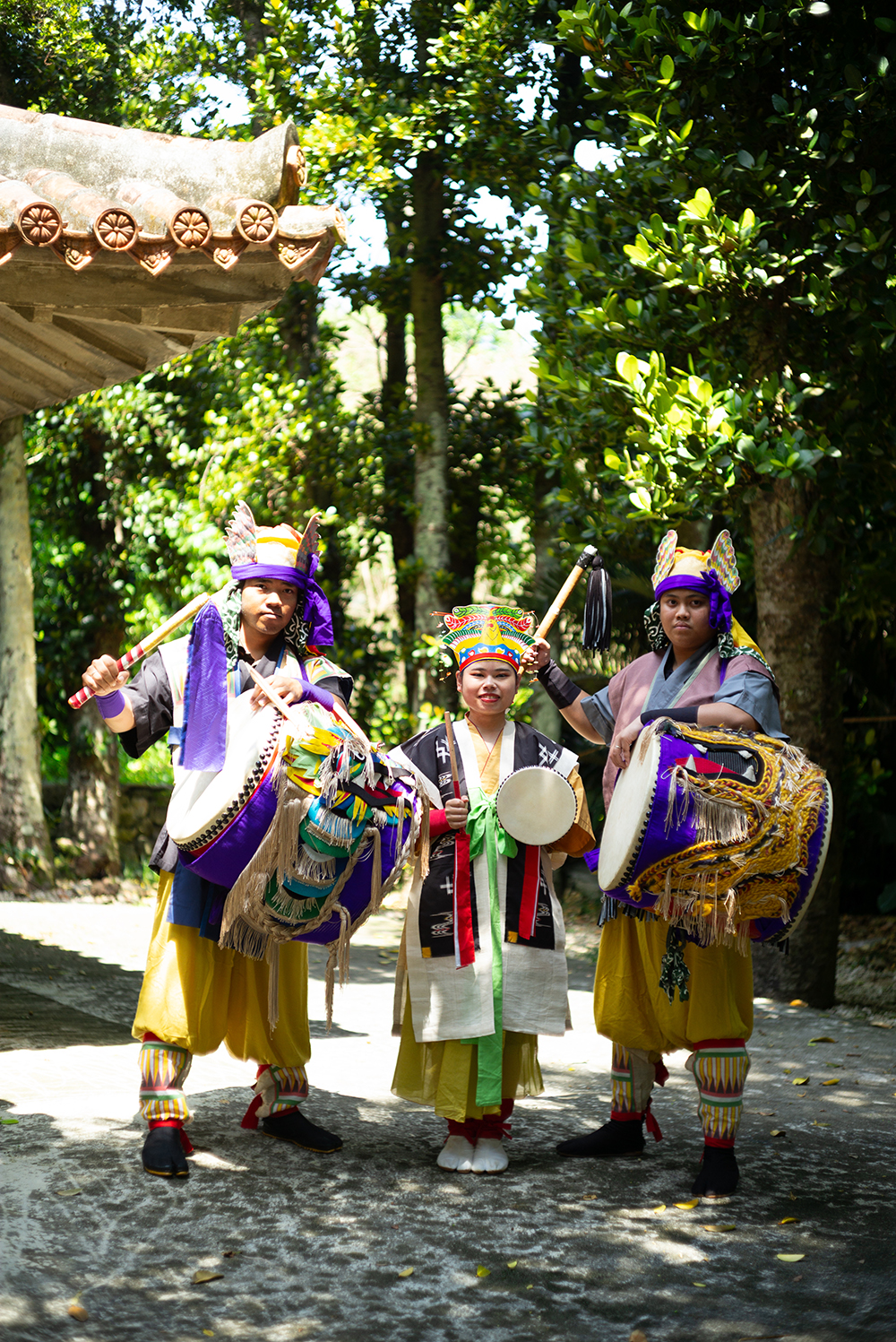
A refreshing morning at the Tarama Village Community Center, Fureai Fukugikan. On the small stage, performers presented one of the dances from the “Fushanufu Eisa” repertoire. Dressed in gorgeous costumes, the performers moved in rhythm with the slow, careful beat of the drums, reenacting a legendary tale: the battle between Toyumya Nakasone, the Lord of Miyako Island, and “Onitora”, the mythical monster of Yonaguni Island. This dynamic yet humorous performance depicts the subjugation of Onitora, who is lured into drinking a cup of sake offered by a peerless beauty brought by the Lord of Miyako Island, becomes pleasantly drunk, and is then defeated.
“Fushanufu” is a term in the Tarama dialect that expresses the idea of mutual aid and compassion among people. The Eisa group that bears this name, “Fushanufu Eisa,” was founded in 2019 as a way to share an original form of Tarama Eisa, based on the traditional event “the Hachigatsu Odori (August Dance),” which can be said to be the identity of Tarama Islanders, to Tarama people throughout Japan and the world. The performers on this occasion were members of the Tarama Village Youth Council (hereafter, “the Youth Council”), who are also part of Fushanufu Eisa. Alongside their peers, they perform and teach both the Hachigatsu Odori and Eisa both within and beyond their community.
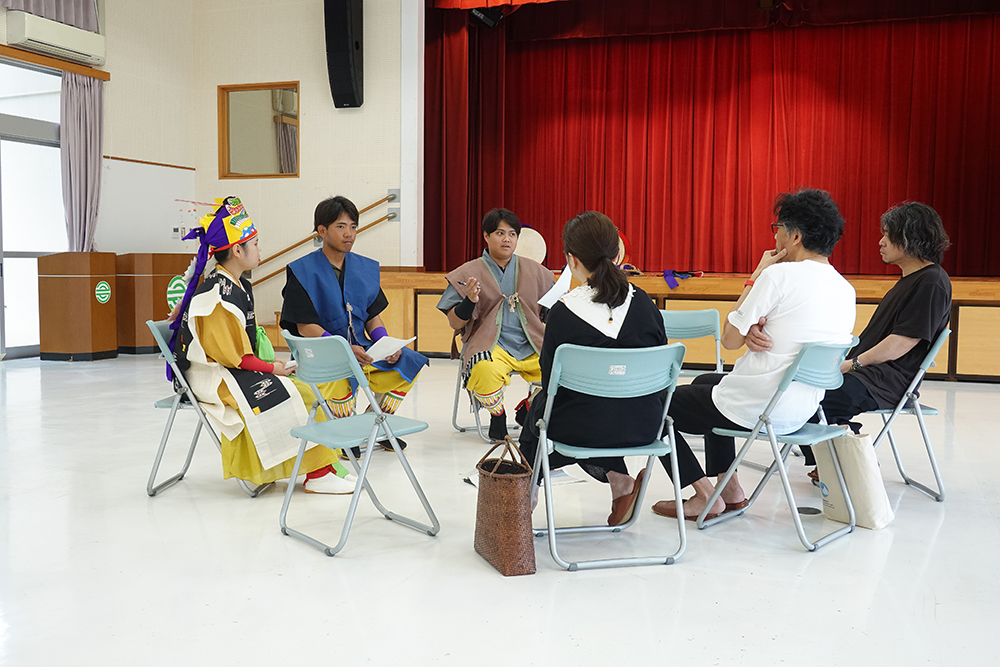
“Hachigatsu Odori was something I admired ever since I was a child. I grew up wanting to dance in it one day, just like my older brothers and uncles,” said Kushi. His fellow vice chair, Hokama, adds with a shy smile, “There are many kinds of dances in the Hachigatsu Odori, but the fi rst one I thought was really cool and wanted to do was the shishimai (Japanese lion dance). I used to imitate it in secret because I was too embarrassed to let the adults see me.”
Oshiro, on the other hand, is originally from Okinawa’s main island. After moving to Tarama to work at the village office, he “automatically” became a member of the Youth Council. “The dances of Tarama have rhythms and movements that are different from those on the main island. There’s a unique charm that can only be found here,” he explains. For him, participating in the Youth Council and in dance activities is
more than just a way to enjoy his free time—it’s also a gateway to becoming part of the village community.
Interviewed in April, 2025
Writer : Mikiko Tamaki / Photographer : Hiroyuki Tamura