Yoshino Town
Atsushi Kitaoka
the Yoshino town mayor (2016-2020)
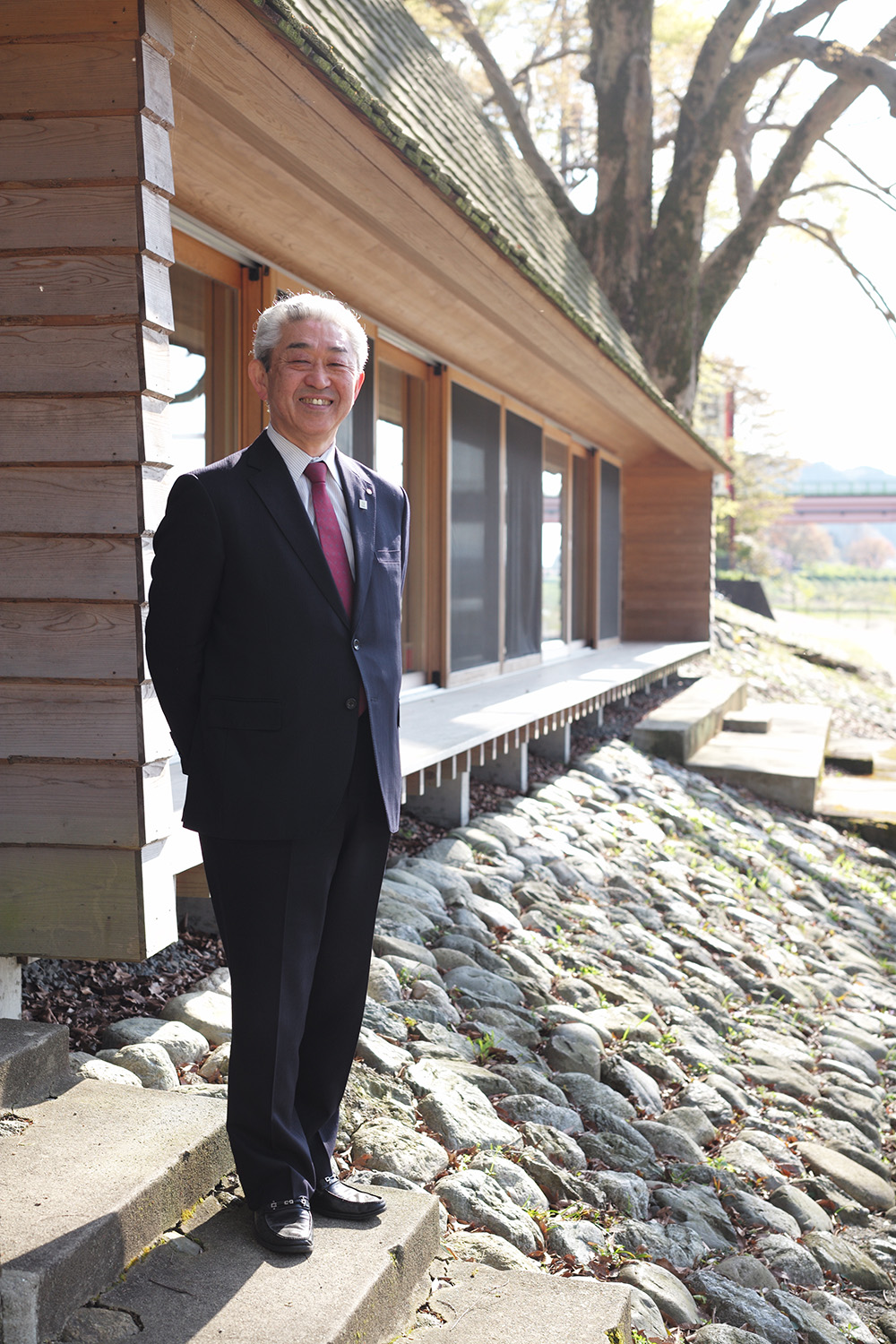
Atsushi Kitaoka was born as the second of four children in a family which runs a sake brewery for generations in the town of Yoshino-cho. Kitaoka has chosen to follow his father’s path as the town mayor. Kitaoka now devotes himself to promoting Yoshino-cho from new perspective: “the wood town Yoshino.”
Bringing back a place of cultural trade to Yoshino, once a town of timber trade.
Forestry has been one of the core economical sources of Yoshino-cho. Its history goes back 500 years, to 16th century when Hideyoshi Toyotomi, the then ruler used Mt. Yoshino’s wild woods to build his castles. Later afforestation advanced its forestry.
“The town of Yoshino-cho used to be a holy ground for Shugendo (Japanese ancient mountain worship incorporating Buddhism concepts) way back in the history and it prospered as a town formed around shrines and temples. It is famous for cherry blossoms because a noted monk Saigyo wrote many poems about them but the industry that represents us is forestry, most notably Yoshino cedar and cypress.
In 2016, the town celebrated its 60th anniversary to become a town from a village. In that year Yoshino-cho made Wood Start Declaration aiming to realize the mokuiku unique to Yoshino-cho (moku-iku roughly means education through woods). The same year, a pioneering event called HOUSE VISION was held in Odaiba, Tokyo. “It was a fair to present our idea for the future of housing. So many people visited from around the world to see ‘Yoshino Cedar House’ created as a collaboration between Go Hasegawa, a world famous young Japanese architect, Airbnb and the town of Yoshino-cho.”
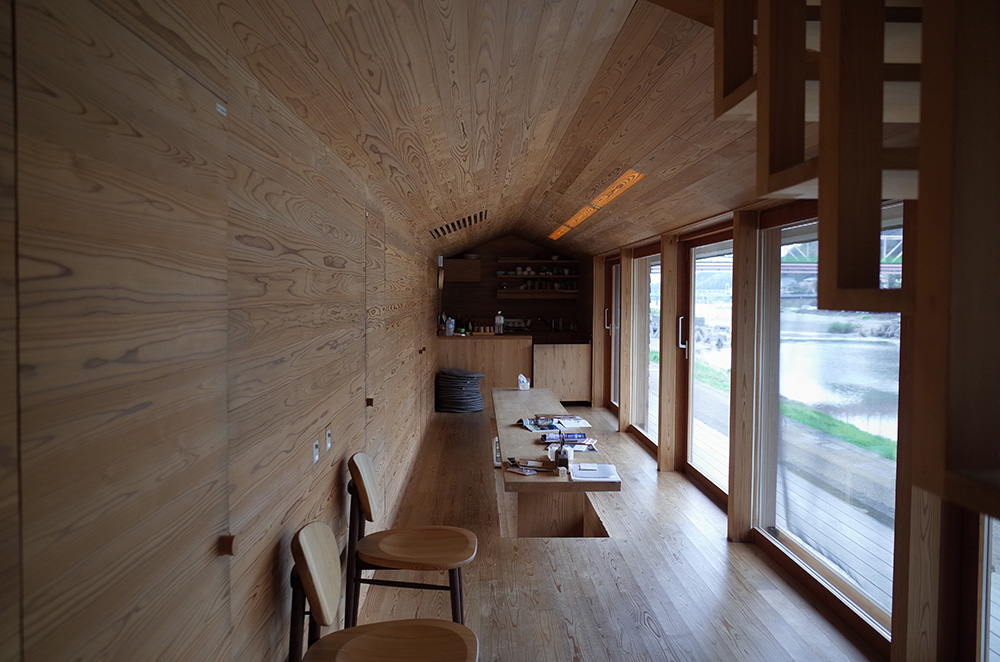
The house was made with Yoshino cedar by the hands of local craftsmen and it returned to the banks of the Yoshino River after the event and publicly opened as a guesthouse where lodgers can experience the charm of the wood.
The characteristics of Yoshino cedar are “straight, dense growth rings and few knots.” “It is used as a special material for architecture and pillars but historically it was more commonly used for things rooted in everyday life such as barrels for sake and soy sauce. We are now thinking of utilizing it for furniture as well.”
Interviewed in April, 2019
Writer : Hideko Takahashi / Photographer : Hiroyuki Tamura